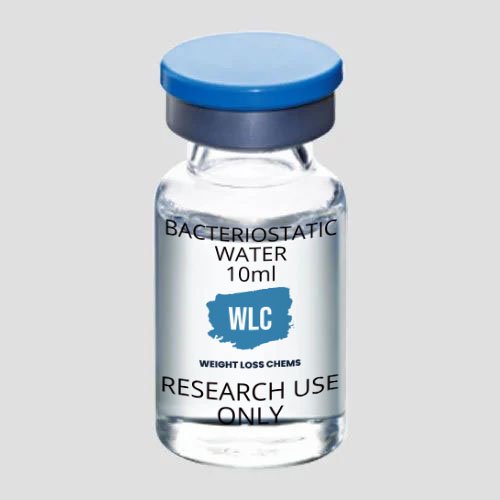
Choosing the correct Bacteriostatic water for your peptides

Bacteriostatic Water & Peptides: Calculator and Mixing Guide
This guide provides a comprehensive overview of bacteriostatic water and its crucial role in peptide reconstitution. Whether you’re involved in peptide research or administering treatments, understanding how to use bacteriostatic water properly is essential for maintaining peptide integrity and ensuring accurate results. This guide covers everything from the basics of bacteriostatic water to advanced techniques for optimizing peptide solutions.
Understanding Bacteriostatic Water

Definition and Composition
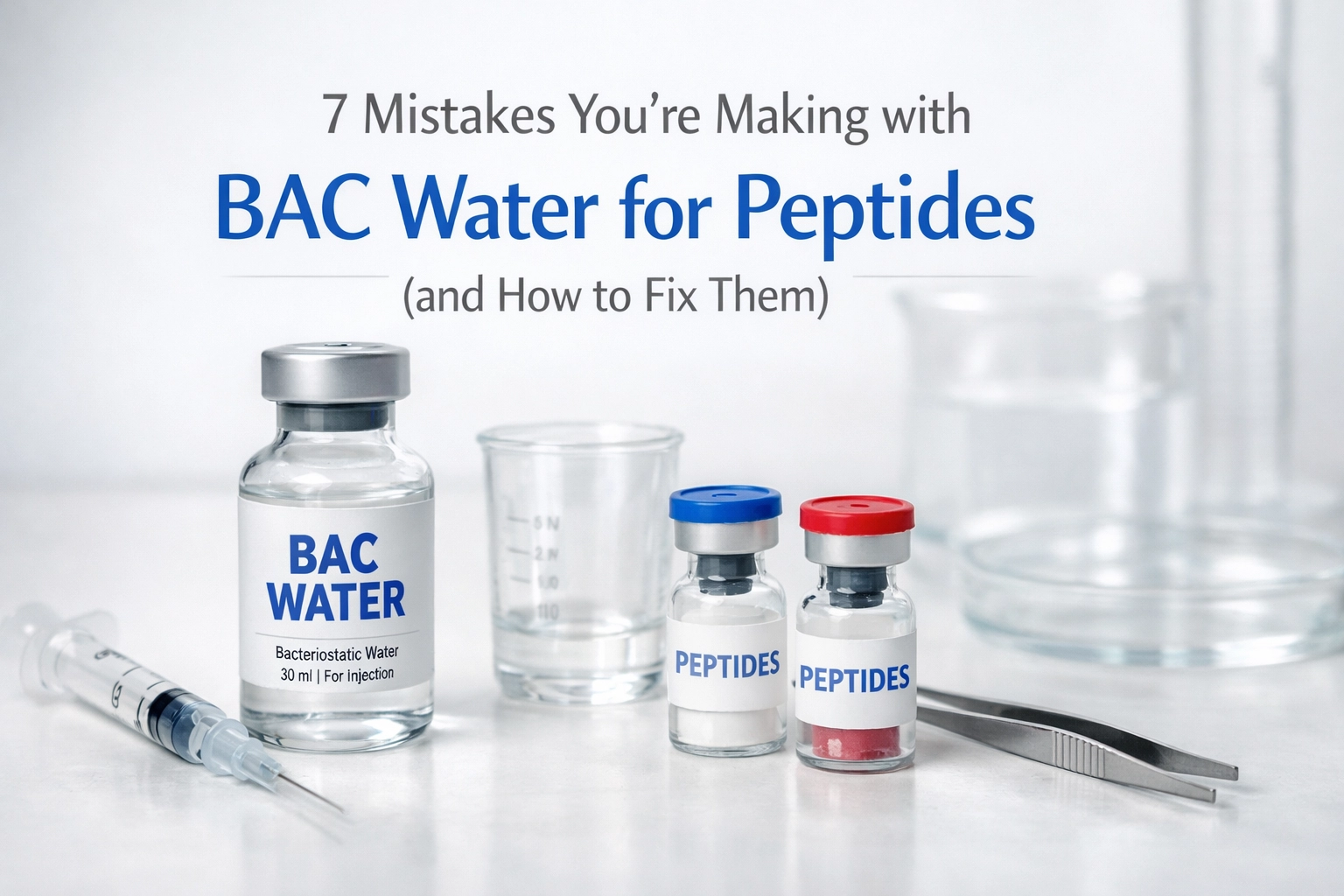
Bacteriostatic water is a sterile water solution containing a bacteriostatic agent, typically benzyl alcohol, at a concentration of 0.9%. This antimicrobial preservative inhibits bacterial growth, making it suitable for research use., making bacteriostatic water ideal for reconstituting medications, particularly lyophilized substances like peptides. The presence of benzyl alcohol extends the shelf life of the reconstituted peptides and maintains its sterility.
Importance in Peptide Reconstitution
Peptide reconstitution is a critical step in preparing peptides for various applications, primarily injection. The choice of reconstituting peptides using high-quality bacteriostatic water is paramount for achieving stability for 28 days. Bacteriostatic water ensures that the delicate peptide structure remains intact during the process. This is essential for preserving the peptide’s bioactivity and achieving accurate and reliable results in research or treatment settings.
Bacteriostatic Water vs. Sterile Water
While both bacteriostatic water and sterile water are used as solvents, their purposes differ significantly. Sterile water is pure, with no additives, but much bacteriostatic water is often preferred for reconstitution. Bacteriostatic water, however, contains a bacteriostatic agent, such as benzyl alcohol, which inhibits bacterial growth. For peptide reconstitution, bacteriostatic water is the preferred choice, as it prevents contamination and extends the shelf life of the reconstituted peptide solution for research purposes.
Choosing the Right Water for Peptides
Bacteriostatic Water with Benzyl Alcohol
Bacteriostatic water with benzyl alcohol is commonly used for reconstituting research peptides. The benzyl alcohol acts as a preservative, preventing bacterial growth and maintaining the sterility of the reconstituted peptides over time. This makes it ideal for multi-dose peptide vials where repeated access is necessary. Bacteriostatic water can be used to ensure the stability of your peptide solution.
Bacteriostatic Water with Acetic Acid
In certain cases, bacteriostatic water with acetic acid might be considered, especially for peptides that are prone to aggregation at neutral pH levels. The addition of acetic acid helps maintain a lower pH, which can improve the solubility and stability of specific peptides. However, it’s crucial to consult peptide-specific guidelines or a peptide calculator, as not all peptides are compatible with acetic acid, especially when considering the reconstitution process.
Saline or Water without Alcohol
Saline (0.9% sodium chloride) or sterile water without alcohol are less common choices for reconstituting peptides, while much bacteriostatic water is often recommended. Saline can sometimes be used if the peptide’s stability is not significantly affected by the absence of a preservative. However, without a bacteriostatic agent, there is an increased risk of bacterial contamination, and the shelf life of the reconstituted peptide is considerably shorter. Water for peptides should ideally be bacteriostatic, as it serves as an antimicrobial agent.
Peptide Reconstitution Guidelines
Calculating the Amount of Bacteriostatic Water
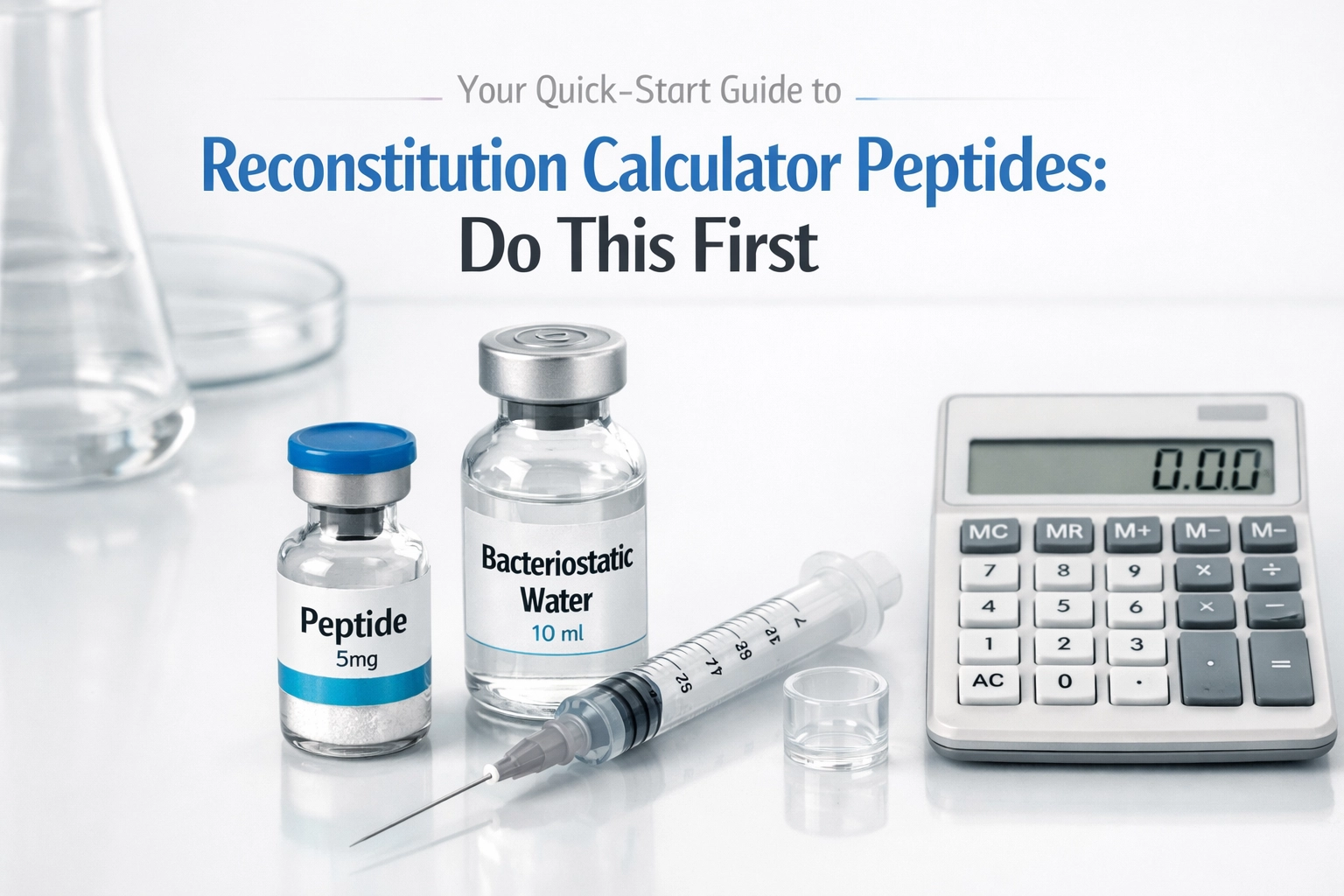
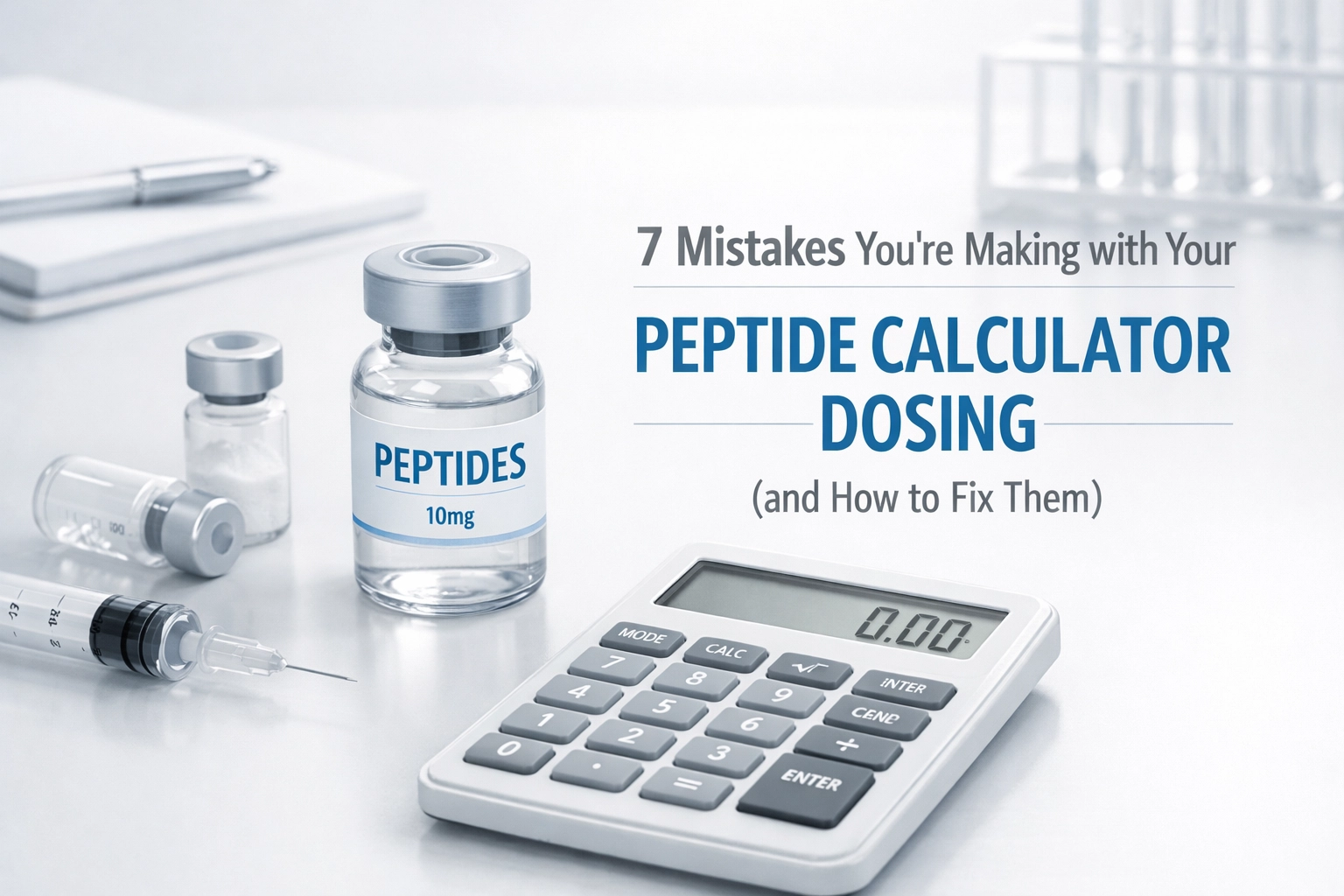
Accurately calculating the volume of bacteriostatic water is crucial for achieving the desired peptide concentration. Use a peptide calculator to determine the exact amount needed, considering the peptide powder’s mass and the target concentration. Accurate reconstitution ensures precise dosing for injection and reliable results in peptide research. Never assume amounts of bacteriostatic water to be correct; always calculate.
Reconstituting Research Peptides
To reconstitute research peptides, gently inject the calculated amount of bacteriostatic water into the peptide vial, aiming the syringe tip against the vial’s side to avoid direct impact on the lyophilized peptide powder. Swirl the vial gently; avoid vigorous shaking that can damage the peptide. Ensure the peptide is fully dissolved, creating a clear peptide solution, as freeze-dry methods can affect solubility. High-quality bacteriostatic water is essential.
Common Mistakes and Issues
Common mistakes in peptide reconstitution include using the wrong solvent (e.g., sterile water instead of bacteriostatic water), improper storage leading to contamination, and incorrect calculation of solvent volume. These can result in peptide degradation, inaccurate concentrations, or bacterial growth, compromising the integrity of the peptide solution. It’s essential to use high-quality bacteriostatic water for peptides.
Importance of pH Levels in Peptide Solutions
pH Considerations for Specific Peptides
The pH level of the reconstituted peptide solution significantly impacts its stability and activity. Certain peptides are more stable at acidic pH, while others require a neutral or slightly alkaline environment. Always consult peptide-specific guidelines to ensure the pH is appropriate. Bacteriostatic water can be used to help control the pH, but adjustments may be needed depending on the peptide.
Impact of pH on Stability
Incorrect pH levels can lead to peptide degradation, aggregation, or precipitation, reducing its bioactivity and shelf life. For example, some peptides may undergo hydrolysis or oxidation at certain pH levels, rendering them ineffective. Using bacteriostatic water for injection helps maintain optimal pH, but monitoring and adjustments may be necessary. Stability is key for research peptides.
Adjusting pH Levels
If the pH of the peptide solution needs adjustment, use sterile acid or base solutions in small increments while monitoring with a pH meter. Acetic acid can lower pH, while sodium hydroxide can raise it. Ensure thorough mixing after each adjustment and verify that the final pH is within the recommended range for the specific peptide to maintain stability. Bacteriostatic water can be used as a starting point.
Common Issues with Incorrect Water Usage
https://www.youtube.com/embed/pNrnidYQ35w https://www.youtube.com/embed/b8M-mT_I5bk
Gelling of Reconstituted Peptides
One common problem is the gelling of reconstituted peptides. This often occurs when the peptide is not fully soluble in the bacteriostatic water due to pH issues or incompatibility with the solvent. Gelling can render the peptide unusable for injection or research, highlighting the importance of using the correct solvent like high-quality bacteriostatic water.
Cloudiness in Peptide Solutions
Cloudiness in a peptide solution typically indicates that the peptide has not fully dissolved or is undergoing aggregation. This can be due to using water for peptides that is not appropriate, such as sterile water without a preservative, or due to improper reconstitution techniques. A clear peptide solution is essential for accurate dosing and efficacy.
Identifying the Cause of Issues
To identify the cause of gelling or cloudiness, first verify that the correct bacteriostatic water was used and that the reconstitution process was performed properly. Check the pH of the solution and compare it to the peptide’s recommended pH range. If bacteriostatic water and sterile water are the same, this could be the root cause. The peptide calculator can help to properly prepare the solution, ensuring the correct amount of water needed for reconstitution.
Rescuing Gelled or Cloudy Peptides
Using Extra Solvents: Acetic Acid vs. DMSO
If a peptide solution gels or becomes cloudy, adding a small amount of acetic acid or DMSO (dimethyl sulfoxide) can sometimes reverse the process. Acetic acid can help lower the pH and improve solubility, while DMSO can disrupt peptide aggregates. High-quality bacteriostatic water for peptides will not always guarantee the right pH, and this may be needed.
Step-by-Step Recovery Process
To attempt recovery, add a small amount of the chosen solvent (acetic acid or DMSO) dropwise to the peptide vial, gently swirling after each addition. Monitor the solution for clarity. If the solution clears, proceed with caution and use the peptide calculator, as the concentration may have changed with the amount of water used. Injection of high-quality peptides must be done right.
When to Avoid Recovery Attempts
Avoid attempting recovery if the gelling or cloudiness is accompanied by discoloration, precipitation, or any signs of bacterial growth. These indicate that the peptide has degraded or been contaminated, rendering it unusable. In such cases, it is best to discard the vial and reconstitute a fresh batch; bacteriostatic water can be used.
Advice on Popular Peptides
Best Practices for Commonly Used Peptides
For popular peptides like IGF-1 LR3 and GHRP-6, always use high-quality bacteriostatic water with benzyl alcohol to reconstitute. Ensure the pH is within the optimal range for each peptide. For peptides prone to aggregation, consider adding a small amount of acetic acid to improve solubility. Bacteriostatic water can be used to reconstitute research peptides. Do not use Acetic Acid water with GLP peptides such as Retaturatide, Tirzepatide or Semaglutide. Common gelling peptides that may enjoy the lower PH levels of AA include CJC1295 with Ipamorelin, Tesamorelin, ARA290, AOD9604.
Peptides to Avoid Mixing with Certain Waters
Avoid reconstituting peptides with sterile water or saline alone, as these lack a preservative and can lead to bacterial growth. Peptides sensitive to acidic pH should not be reconstituted with bacteriostatic water containing acetic acid. Always consult the peptide-specific guidelines before attempting reconstitution, as high-quality bacteriostatic water will not guarantee the right results for research purposes.
Long-Term Storage and Shelf Life Considerations
After reconstituting peptides, store them in the refrigerator (2-8°C) to maximize their shelf life. Avoid freezing reconstituted peptides unless specifically recommended by the manufacturer. Properly reconstituted peptides with bacteriostatic water typically have a shelf life of several weeks, but always check the manufacturer’s recommendations. Bacteriostatic water for injection helps maintain stability.