
The Ultimate Guide to Retatrutide Dosage: Everything You Need to Succeed in the Lab

Hi Mate! Welcome back to the WeightLossChems inner circle. If you’re reading this, you’re likely looking to stay at the absolute cutting edge of metabolic research. We’re talking about the "Triple G": the holy grail of research peptides that is currently sending shockwaves through the scientific community.
We are, of course, talking about Retatrutide.
If Tirzepatide was a leap forward, Retatrutide is a quantum jump. As an investigational triple-receptor agonist, it doesn't just knock on the door of weight loss; it breaks it down. But with great power comes the need for precision. To unlock the full potential of your research and transform your lab results, you need a rock-solid understanding of the Retatrutide dosage protocol.
In this guide, we’re going to dive deep into the technical pathways, the titration schedules, and exactly how to manage those high-potency vials: whether you’re working with a 5mg starter or a massive 50mg research kit.
What is Retatrutide? The "Triple Agonist" Revolution
Before we talk numbers, let’s talk science. Retatrutide is what researchers call a "triple agonist." While earlier generations focused on one or two pathways, Retatrutide targets three distinct metabolic pathways:
- GLP-1 (Glucagon-like peptide-1): Enhances insulin secretion and slows gastric emptying.
- GIP (Glucose-dependent insulinotropic polypeptide): Improves insulin sensitivity and fat metabolism.
- GCG (Glucagon receptor): This is the game-changer. It increases energy expenditure (thermogenesis) and targets liver fat directly.
By hitting all three, the retatrutide peptide offers a level of metabolic synergy that we’ve never seen before. It’s the high-tech solution to complex biological hurdles.

The Gold Standard Retatrutide Dosage Protocol
In the world of research peptides, titration is your best friend. You don’t just jump into the deep end; you wade in to allow the research subject’s metabolic pathways to adjust. Following a gradual escalation minimizes "noise" in the data (side effects like nausea) and maximizes long-term efficacy.
Based on current Phase 2 and Phase 3 trial data, here is the most common titration schedule used by expert researchers:
Phase 1: The Induction Period (Weeks 1–4)
- Weekly Dose: 2mg
- Goal: Establish baseline tolerance and prime the receptors.
- What to expect: Mild appetite suppression begins as the GLP-1 and GIP receptors activate.
Phase 2: Early Escalation (Weeks 5–8)
- Weekly Dose: 4mg
- Goal: Accelerate fat oxidation.
- What to expect: This is often where the "magic" starts. The addition of Glucagon (GCG) agonism begins to ramp up energy expenditure.
Phase 3: The Metabolic Shift (Weeks 9–12)
- Weekly Dose: 6mg
- Goal: Solidify weight loss trajectory.
- What to expect: Significant metabolic changes are usually recorded here. If side effects are present, some researchers choose to stay at 4mg for an extra 2 weeks before moving to 6mg.
Phase 4: Target Research Dose (Weeks 13–16)
- Weekly Dose: 8mg
- Goal: Achieve peak therapeutic effect.
- What to expect: Research shows that 8mg to 12mg is the "sweet spot" for maximal body mass reduction.
Phase 5: Maintenance & Optimization (Weeks 17+)
- Weekly Dose: 10mg – 12mg
- Goal: Long-term metabolic regulation.
| Week Range | Dosage | Purpose |
|---|---|---|
| 1 – 4 | 2mg | Induction |
| 5 – 8 | 4mg | Escalation |
| 9 – 12 | 6mg | Optimization |
| 13 – 16 | 8mg | Peak Performance |
| 17+ | 12mg (Max) | Maximum Threshold |
[YouTube Video Placeholder: Retatrutide vs Tirzepatide – The Scientific Difference by Michael Morelli]
Managing Your Vials: 5mg to 50mg
At WeightLossChems, we know that every lab has different needs. Whether you are running a small pilot study or a large-scale project, choosing the right vial size is essential for efficiency.
The 5mg & 10mg Vials
Perfect for the induction and early escalation phases. These smaller units ensure the peptide remains at peak freshness.
- 5mg Vial: Provides 2.5 doses at the 2mg induction level.
- 10mg Vial: Perfect for a full 4-week cycle at 2.5mg or two weeks at 5mg.
The 20mg & 30mg "Professional" Vials
As you move into the middle stages of the retatrutide dosage protocol, these vials become the backbone of your research.
- 20mg Vial: Covers nearly a full month at the 5mg-6mg range.
- 30mg Vial: The "sweet spot" for value and potency.
The 50mg "Master" Vial
For those in our VIP Club running extensive protocols, the 50mg vial is the ultimate high-tech solution. It allows for consistent dosing across multiple weeks at the 10mg-12mg maintenance level without the need for constant reconstitution of new vials.
Reconstitution 101: Precision is Everything
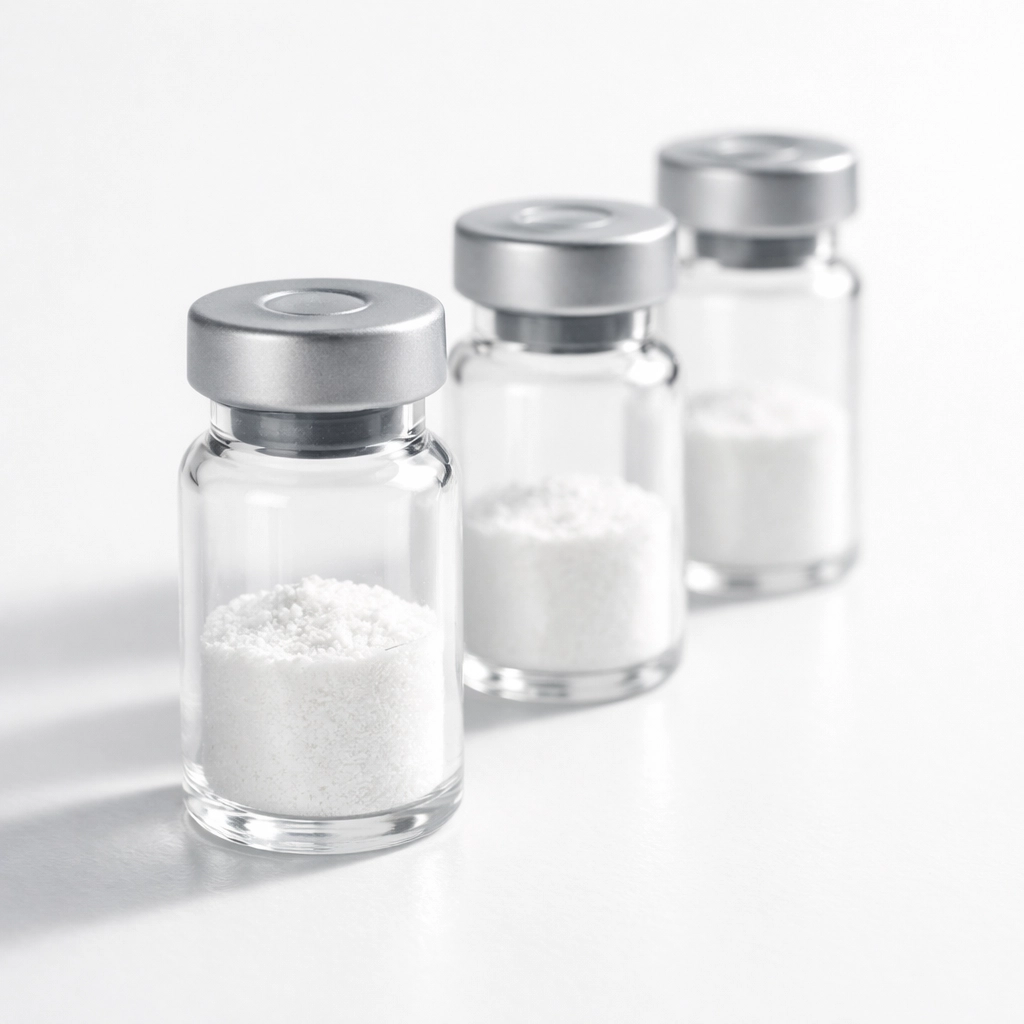
To revolutionize your results, you must master the art of reconstitution. Retatrutide arrives as a lyophilized (freeze-dried) powder. To activate it for research, you’ll need Bacteriostatic (Bac) Water.
- Prep: Clean the top of the vial and the Bac Water with an alcohol swab.
- The Mix: Slowly drip the Bac Water down the side of the glass vial. Do not spray it directly onto the powder, as this can fragment the delicate peptide chains.
- The Swirl: Gently rotate the vial between your palms. Never shake it!
- Storage: Once reconstituted, the retatrutide peptide must be kept refrigerated at 2°C – 8°C.
Pro Tip: Use a Peptide Calculator to ensure your "per unit" measurement on the syringe matches your intended mg dosage. If you put 2ml of Bac Water into a 10mg vial, every 10 units on a standard U-100 syringe equals 0.5mg of peptide.
[YouTube Video Placeholder: How to Reconstitute Peptides Safely – Step by Step Guide]
Navigating the Lab: Common Research Observations
While Retatrutide is incredibly effective, it is a potent compound. In the lab, you might observe "adjustment periods."
- Heart Rate: Because of the Glucagon and GIP components, a slight increase in resting heart rate is common in research subjects. This is a sign of increased thermogenesis.
- Gastrointestinal Response: If the subject experiences nausea, it usually indicates the titration is moving too fast. Dropping back to the previous dose for 1-2 weeks is a standard "scientific luxury" that ensures long-term success.
- Skin Sensitivity: Some researchers have noted increased skin sensitivity (allodynia). This is usually temporary and resolves as the body acclimates to the triple agonist.
Why Consistency Wins
The secret to combatting metabolic plateaus is consistency. Retatrutide has a half-life of approximately 6 days. This means administering the dose on the same day every week is vital to maintaining steady plasma levels.
Missing a dose or "bouncing" between dosages can lead to erratic data and reduced efficacy. Treat your research with the professional respect it deserves, and the results will follow.
Join the WeightLossChems Community
Researching peptides like Retatrutide isn't just about the molecules; it's about being part of a community that values progress, science, and the pursuit of better health. When you source from http://weightlosschems.com, you aren't just buying a product; you’re gaining access to a lifestyle.
Keep an eye out for our Exclusive drops and tiered membership offers. We are constantly updating our inventory with the highest purity 5mg, 10mg, 20mg, 30mg, and 50mg vials to ensure your lab never runs dry.
Final Thoughts for the Expert Researcher
Retatrutide represents the pinnacle of current weight-loss research. By targeting GLP-1, GIP, and GCG simultaneously, it offers a triple-threat approach to metabolic dysfunction. Remember: Start low, go slow, and stay consistent.
The path to unlocking a new you (or your research subject) starts with precision. Use the titration schedules provided, handle your 50mg vials with care, and always prioritize the integrity of your research environment.
Ready to take your research to the next level? Head over to our shop and grab the supplies you need to succeed.
Stay sharp, keep researching, and we'll see you in the next update!
– The WeightLossChems Team