
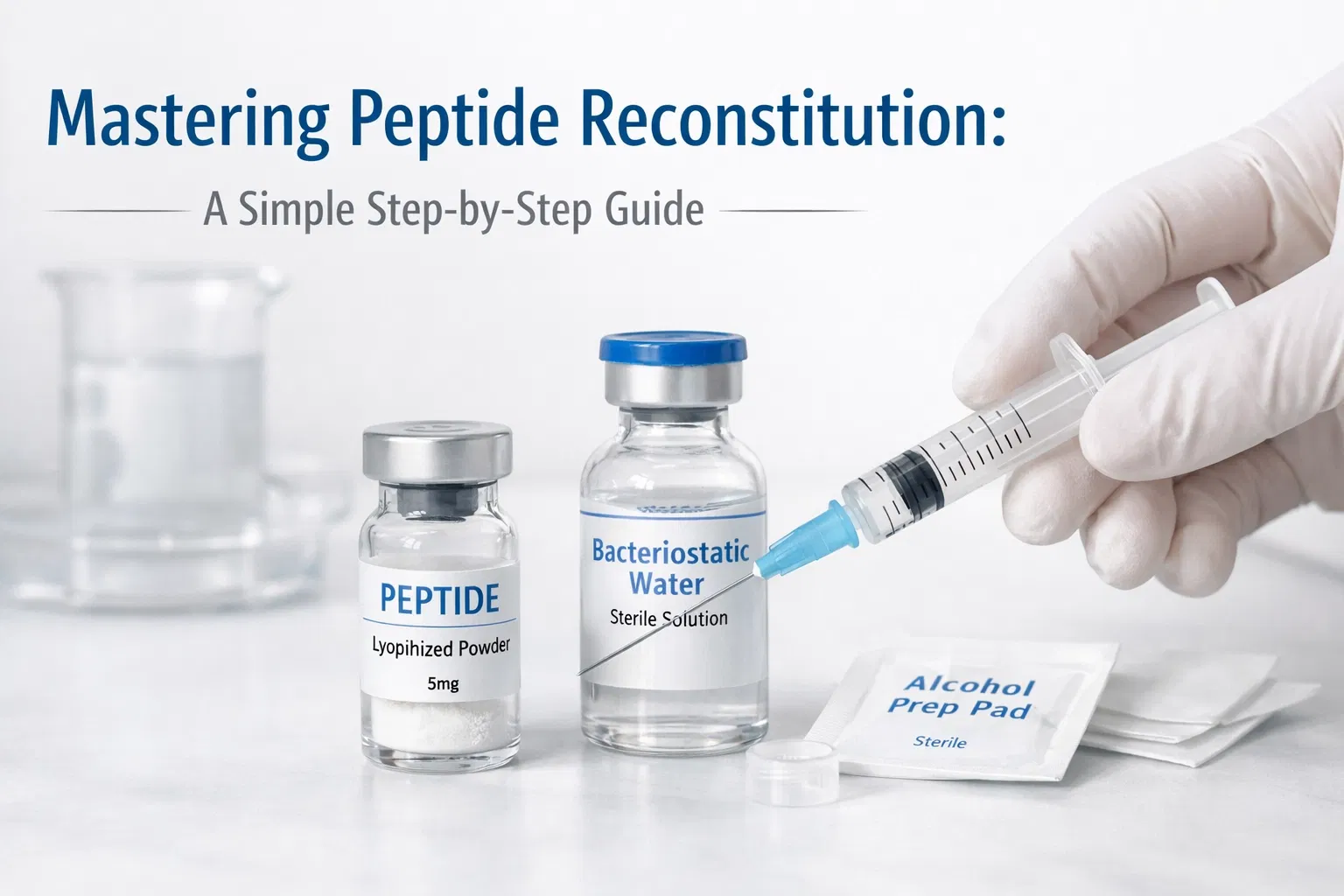

Hi Mate! Welcome to the lab. If you’ve just secured your latest shipment of high-purity research compounds from WeightLossChems, you’re probably staring at a tiny vial of white powder and wondering, "Now what?"
Don't sweat it. You’ve officially entered the world of bio-optimization, where precision meets performance. Reconstituting peptides: the process of turning that "lyophilized" (freeze-dried) powder into a research-ready liquid: is the first "boss level" every researcher needs to master. Get it right, and you unlock the full metabolic potential of your compounds. Get it wrong, and you might as well be injecting expensive tap water.
In this guide, we’re going to strip away the complex medical jargon and give you a straight-shooting, "scientific luxury" walkthrough on how to handle your vials with the respect they deserve. From selecting the right consumables to mastering the "slow drip" technique, we’ve got you covered.
Why Do Peptides Come in Powder Form?
Before we jump into the "how," let’s talk about the "why." You might be thinking, “Why can’t they just send it to me ready to go?”
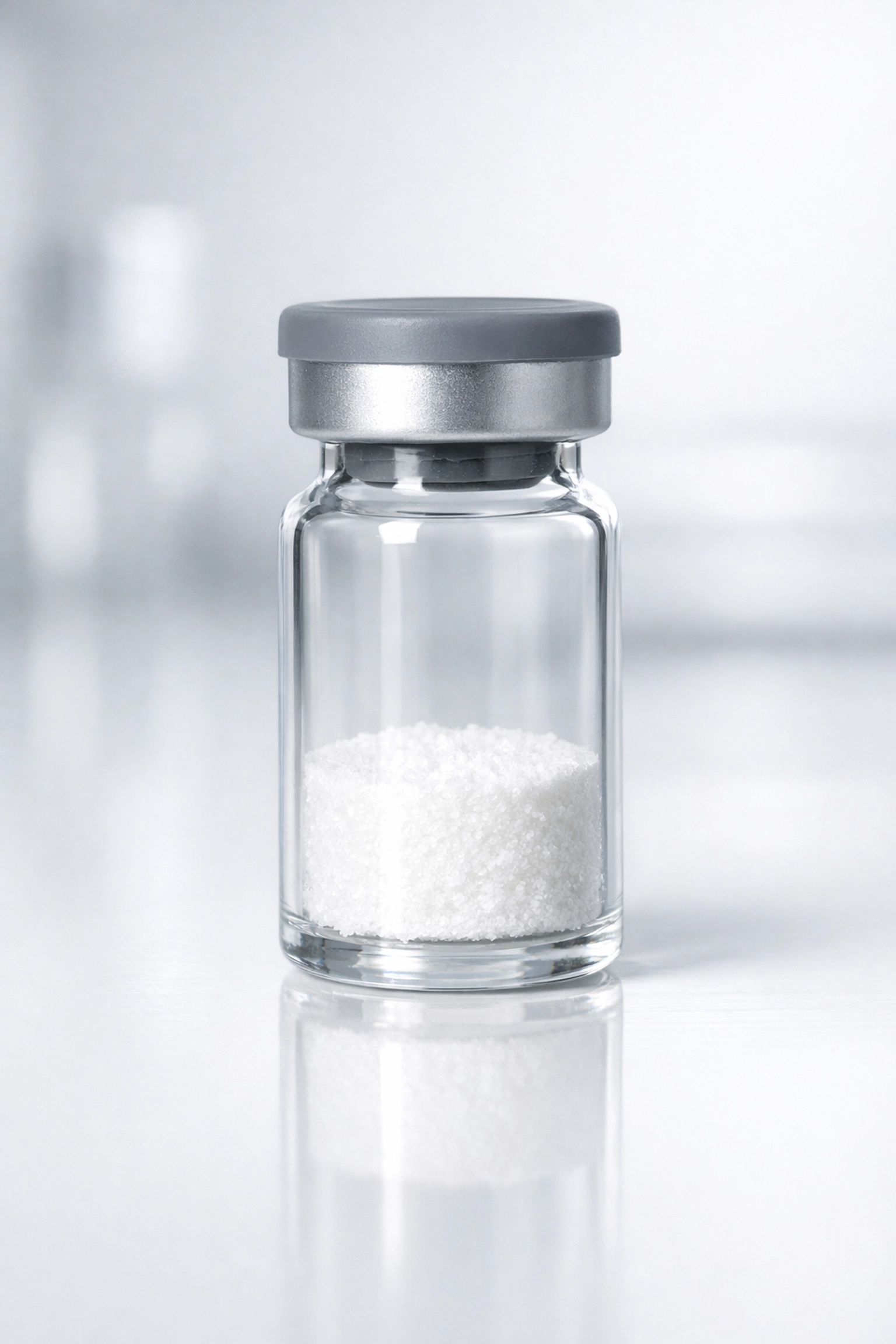
The answer is molecular integrity. Peptides are essentially chains of amino acids, and in a liquid state, they are incredibly fragile. Heat, light, and even time start breaking those bonds the moment they hit a solution. To ensure you get the most potent, high-performance product possible, we use a process called lyophilization.
By flash-freezing the peptide and removing the moisture under a vacuum, we create a stable, "dormant" state for the compound. This allows it to survive shipping and storage without losing its revolutionary capabilities. Think of it like a high-tech "sleep mode" for your research materials. Reconstitution is simply the "wake-up call."
The Essential Toolkit: Don't Skimp on the Basics
Precision research requires precision tools. You wouldn't try to fix a Ferrari with a plastic wrench, right? Your peptides deserve better than bargain-bin supplies. To perform a flawless reconstitution, you’ll need:
- Your Lyophilized Peptide Vial: (The star of the show).
- Bacteriostatic Water (Bac Water): This is non-negotiable. Unlike sterile water, Bac Water contains 0.9% Benzyl Alcohol, which prevents bacteria from throwing a party in your vial. Check out our Bac Water.
- Alcohol Prep Pads: For sterilizing everything. If it’s not sterile, it’s not safe.
- Large Reconstitution Syringe: Usually a 3ml or 5ml syringe to transfer the water.
- Precision Insulin Syringes: For your actual research measurements. We recommend our 31g Needles for maximum comfort and accuracy.
- A Clean Workspace: A flat, well-lit surface away from pets, fans, or open windows.
The "Golden Rule" of Bac Water vs. Sterile Water
Here is a pro-tip from the inner circle: Never use plain sterile water for multi-use vials.
Sterile water is exactly what it sounds like: it’s clean, but it has no preservative. Once you pierce that rubber stopper for the first time, microscopic contaminants can enter. Without the Benzyl Alcohol found in Bacteriostatic Water, those contaminants can multiply, effectively ruining your peptide and potentially causing a nasty reaction. Bac Water is the gold standard for maintaining a sterile environment for up to 28-30 days once opened.
? VIDEO GUIDE: Mastering the Mix
Step-by-Step: The Master Class in Reconstitution
Ready to transform that powder into a metabolic solution? Follow these steps exactly to ensure you don’t damage the delicate peptide chains.
Step 1: Prep and Sterilize
Wash your hands like you’re about to perform surgery. Wipe down your workspace with a disinfectant. Pop the plastic "flip-top" caps off your peptide vial and your Bac Water. Now, take an alcohol swab and vigorously wipe the rubber stoppers of both vials. Let them air dry for about 30 seconds: don’t blow on them (your breath is full of bacteria!).
Step 2: Draw the Water
Using your large syringe, draw up the required amount of Bacteriostatic Water. Most researchers use 1ml or 2ml of water per vial, but this depends on your specific protocol.
- Pro Tip: Pull back the plunger to draw air into the syringe first (equal to the amount of water you need), inject that air into the Bac Water vial, and then draw the water out. This equalizes the pressure and makes drawing the liquid a breeze.
Step 3: The "Slow Drip" Injection (The Most Important Part!)
Peptides are "fragile beauties." If you spray water directly onto the powder under high pressure, you can "denature" or break the peptide chains.
Insert the needle through the center of the peptide vial’s rubber stopper. Aim the needle at the inside glass wall of the vial rather than directly at the powder. Slowly: and we mean slowly: depress the plunger. Let the water trickle down the side of the glass.
Note: You might feel a "vacuum" pulling the water in. This is normal and a sign of a high-quality, vacuum-sealed vial. Hold the plunger back slightly to control the speed so it doesn’t "crash" in.
Step 4: Equalize the Pressure
Before you pull the needle out, draw a small amount of air out of the vial into your empty syringe. This prevents the "pissing out" effect where the pressure inside the vial tries to force the liquid back out through the needle hole next time you use it.
Step 5: The Gentle Swirl
NEVER SHAKE THE VIAL. Shaking is the quickest way to ruin your research.
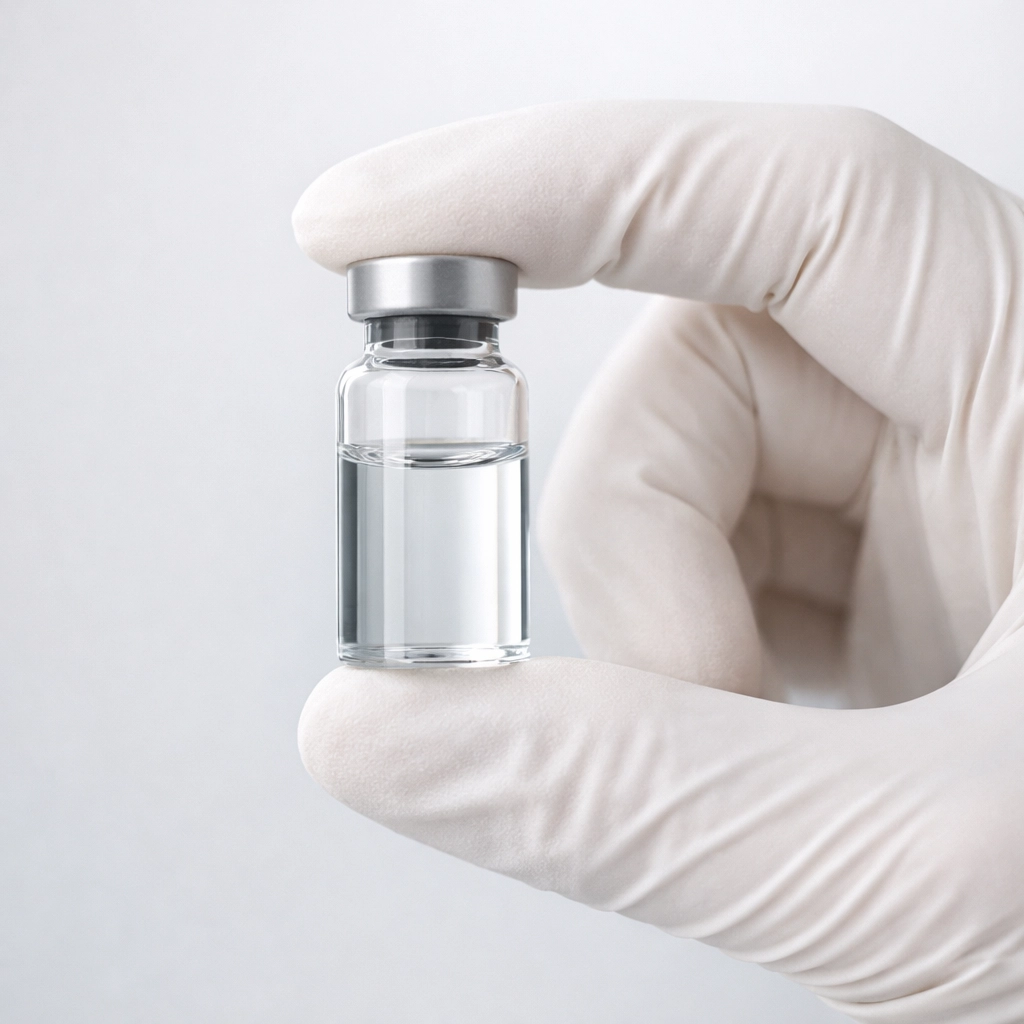
Instead, pick up the vial and gently swirl it in a circular motion. You can also roll it between your palms. Some peptides dissolve instantly; others (like some of our more complex "triple agonists") might take a few minutes. If there are still white flakes, just let it sit in the fridge for 10-15 minutes and come back to it. It will clear up on its own.
The Math: Using the Peptide Calculator
Once your solution is clear, you need to know how much to draw into your 31g Needles for your specific research goals. This is where most people get a headache, but we’ve made it simple.
Don't try to do long-form division in your head. We have a dedicated Peptide Calculator right here on the site. You simply plug in:
- How many milligrams (mg) of peptide are in the vial (e.g., 5mg or 10mg).
- How much Bac Water you added (e.g., 2ml).
- Your desired dose (e.g., 250mcg).
The calculator will tell you exactly how many "units" to draw on your insulin syringe. Easy as.
Storage: Protecting Your Investment
Now that you’ve successfully revolutionized your research material into a liquid state, you need to keep it stable.
- Temperature: Store your reconstituted vials in the refrigerator (between 2°C and 8°C). Do not freeze them once they are liquid, as ice crystals can tear the molecules apart.
- Light: Keep them in the dark. UV light is the enemy of peptide stability. A small, opaque container in the back of the fridge is perfect.
- Longevity: Most reconstituted peptides are best used within 4 weeks. After that, they may begin to lose potency.
Troubleshooting & Common Mistakes
"My solution is cloudy!"
If you’ve swirled and waited, and it’s still cloudy, it could be a pH issue or a sign of a damaged peptide. However, some specific compounds have a natural slight "haze." Always check the specific product notes on buy peptides.
"I accidentally dropped the vial!"
If the vial didn't break, it’s probably fine, but give it some "rest time" in the fridge to let the molecules settle before use.
"I injected the water too fast!"
Don't panic. While it’s not ideal, one fast injection usually won't destroy the entire batch. Just be more careful next time to ensure maximum "scientific luxury" results.
Join the VIP Research Club
Mastering the mix is just the beginning. At WeightLossChems, we’re more than just a shop: we’re a community of high-performers looking to unlock the next level of human physiology.
If you want access to exclusive drops, tiered membership discounts, and the latest research on metabolic pathways, make sure you're signed up for our VIP list. We provide the tools; you provide the breakthroughs.
Ready to start your next protocol? Grab your Bac Water and 31g Needles today and let's get to work!
Happy Researching, Mate!