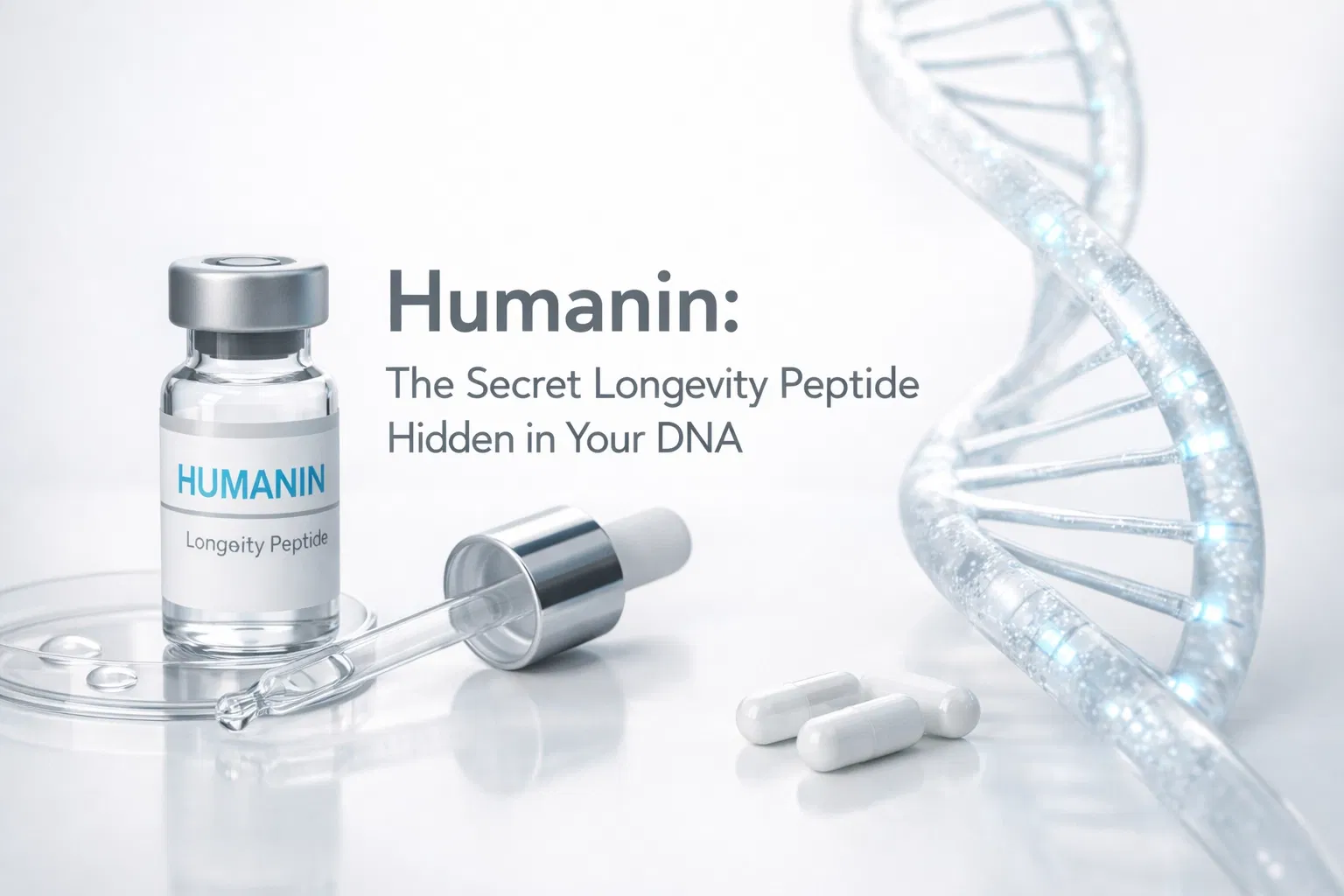

Hi Mate! Ivan here: or rather, Penny writing for the big boss. Today, we’re diving deep into the "underground" circuit of the research world. If you’ve been following our blog, you know we love the heavy hitters like Tirzepatide and Retatrutide for metabolic shifts. But if you’re looking to Revolutionize your understanding of how the body actually fights the clock at a cellular level, you need to know about Humanin.
Most people think all their genetic instructions come from the nucleus of their cells. But there’s a secret, ancient manual hidden inside your mitochondria: the "powerhouses" of your cells. That’s where the Humanin peptide lives. It’s a Mitochondrial-Derived Peptide (MDP), and in the world of longevity research, it’s basically the biological equivalent of a high-end software update for your aging hardware.
Let’s break down why this little-known molecule is the next frontier in cellular protection.
The Mitochondrial "Powerbank" for Your Cells
Inside every cell, your mitochondria are working overtime to produce energy (ATP). But mitochondria aren't just batteries; they have their own DNA. Scientists recently discovered that this mitochondrial DNA encodes for small proteins called MDPs, and Humanin was the first one found.
Think of Humanin as the "Maintenance Manager" of your cellular factory. When things start to get messy: oxidative stress, protein misfolding, or general age-related decay: Humanin steps in to stabilize the situation. It’s a cytoprotective powerhouse, meaning its primary job is to keep your cells from hitting the "self-destruct" button prematurely.
Why You Should Care About MDPs
- Targeted Protection: Unlike broad antioxidants, Humanin works inside the mitochondria where the most damage occurs.
- Longevity Signal: It acts as a signaling molecule, telling other cells to toughen up against stress.
- Elite Research Potential: This isn't your average over-the-counter supplement; this is high-tech bio-optimization.

Longevity Research: The Centenarian Connection
Why do some people live to 100 while looking and feeling 20 years younger? Longevity research has found a massive clue in Humanin levels.
In groundbreaking human studies, researchers looked at the children of centenarians (people who live to 100+). These "genetic VIPs" are statistically more likely to live longer, healthier lives. The study found that these individuals had significantly higher circulating levels of Humanin compared to their peers. It seems that having a "high-output" Humanin factory in your DNA is one of the secret keys to staying in the game longer.
But for the rest of us, there’s a catch: Humanin levels drop off a cliff as we age. In primates, levels can plummet by nearly 40% by the time they reach mid-life. This decline is directly linked to the onset of age-related issues. By studying the Humanin peptide, researchers are looking for ways to "Unlock" that centenarian-level protection for the rest of the population.
Neuroprotection: Shielding the Command Center
One of the most exciting areas of Humanin research is its role in neuroprotection. Our brains are incredibly energy-hungry, making them highly susceptible to mitochondrial failure.
Humanin has shown a remarkable ability to protect neurons from the "proteotoxicity" (protein junk) associated with conditions like Alzheimer’s. It interferes with the pathways that cause cell death in the brain, effectively acting as a chemical shield for your gray matter.
How Humanin Protects the Brain:
- Inhibits Apoptosis: It stops the "programmed cell death" signals that get triggered by stress.
- Reduces Oxidative Stress: It mops up the toxic byproducts of energy production.
- Enhances Survival Signaling: It activates the JAK2/STAT3 pathway, a fancy scientific way of saying it tells your brain cells, "Don't give up, keep functioning."

The "Naked Mole-Rat" Secret
If you want to talk about cellular protection, you have to talk about the naked mole-rat. These weird-looking creatures are the rockstars of the longevity world: they live up to 30 years (about 10x longer than a normal rat) and almost never get cancer.
Guess what they have in common with centenarians? High, stable levels of Humanin. While normal mice see their Humanin levels tank as they get old, the naked mole-rat maintains high levels throughout its entire life. This constant "software update" is likely why their cells stay so resilient against the ravages of time.
Humanin in the Research Lab: What the Data Says
In animal models, overexpressing Humanin didn't just make the subjects look better; it actually Transformed their health markers.
- Lifespan Extension: Some studies showed a 12% increase in total lifespan.
- Pathology Reduction: Age-related disease markers dropped by a staggering 25%.
- Metabolic Optimization: It has been shown to improve insulin sensitivity, making it a "cousin" of sorts to the weight loss peptides we usually talk about.
However, nature doesn't give anything away for free. Research suggests a "longevity trade-off." Organisms with ultra-high Humanin levels often have a smaller body size and fewer offspring. It’s as if the body decides to stop focusing on "expanding the empire" (reproduction and growth) and starts focusing on "fortifying the castle" (cellular maintenance).
Video: The Science of Longevity Peptides
To get a better visual of how these "longevity p-ptides" work to Revolutionize human health, check out this deep dive into mitochondrial signaling:
[VIDEO_EMBED: https://www.youtube.com/watch?v=your-longevity-peptide-video-link]
The WeightLossChems Perspective: Why This Matters for You
At WeightLossChems, we aren't just about the scale: we're about Elite Performance and Total Body Optimization. We know that "skinny" isn't the same as "healthy." True health starts at the mitochondrial level.
If you’re researching ways to Combat the biological clock, Humanin is a top-tier candidate. It represents the "Scientific Luxury" of modern research: a molecule that doesn't just mask symptoms but actually addresses the root cause of cellular decline.
Research Profile: Humanin Peptide
- Classification: Mitochondrial-Derived Peptide (MDP)
- Primary Function: Cytoprotection and stress resilience
- Key Benefit: Potential for significant neuroprotection and lifespan extension
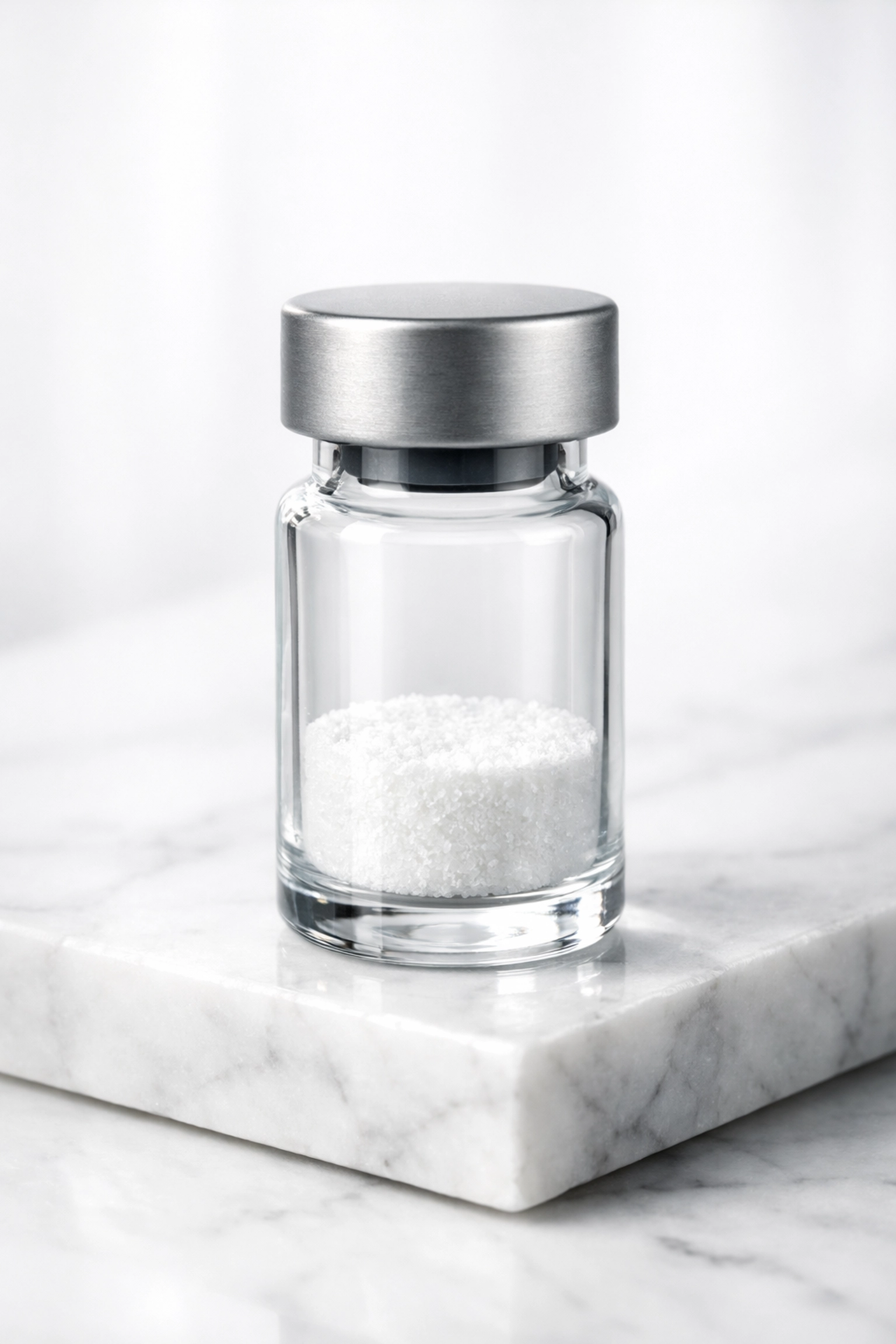
- Format: Lyophilized powder for laboratory research use
How to Get Involved with the VIP Community
The world of research peptides moves fast. Today's "secret peptide" is tomorrow's mainstream breakthrough. If you want to stay ahead of the curve and get Exclusive Drops on the latest longevity research materials, you need to be part of our inner circle.
Join the WeightLossChems VIP Club:
- Early Access: Be the first to know when we stock rare MDPs and bioregulators.
- Insider Knowledge: Get more deep-dives like this one delivered straight to your inbox.
- Member-Only Pricing: Because optimizing your biology shouldn't break the bank.
Final Thoughts: The Future is Mitochondrial
Humanin is a reminder that we still have so much to learn about our own bodies. The fact that a "secret" longevity code has been sitting inside our mitochondria this whole time is mind-blowing. Whether you're interested in its neuroprotection capabilities or its potential to Unlock a longer healthspan, the Humanin peptide is a non-negotiable for serious researchers.
Don't wait for the mainstream media to catch up in five years. Start your research now and Transform your understanding of what’s possible.
Ready to upgrade your research protocol? Head over to our shop and see what’s currently in the "Exclusive Drops" section. Let’s get those mitochondria firing on all cylinders!
Cheers,
Penny & the WeightLossChems Team