
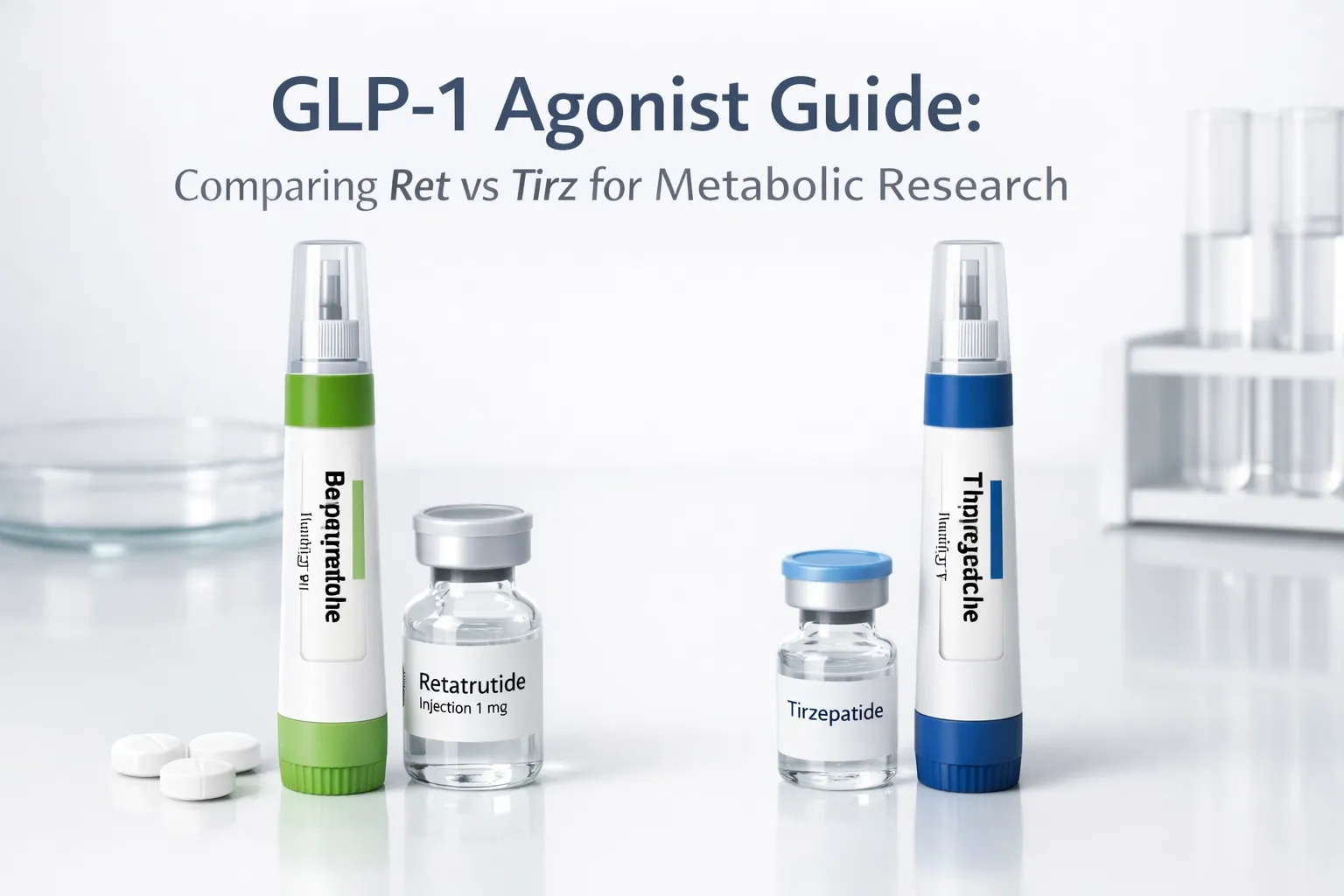

Hi Mate, and welcome back to the WeightLossChems lab report. If you’ve been keeping an eye on the fast-moving world of metabolic research, you know that the landscape is shifting quicker than a peptide in Bac water. We’ve moved far beyond the basic single-receptor agonists of yesteryear. Today, researchers are looking for more: more efficiency, more pathways, and more transformative data.
In the spotlight today are the two heavy hitters of the research world: TIIIRZ (the dual agonist) and the newcomer making massive waves, REEETA (the triple agonist). If you’re trying to decide which of these powerhouses belongs in your next study, you’ve come to the right place. We’re going to break down the science of dual vs. triple agonists, explore why Glucagon is the "secret sauce," and help you navigate the high-tech world of metabolic research.
The Evolution of the Agonist: Why One Pathway Isn't Enough
Back in the day, research was focused solely on GLP-1 (Glucagon-Like Peptide-1). It was a breakthrough, sure, but the body is a complex machine with multiple metabolic locks. Using a single-pathway peptide is like trying to open a high-security vault with one key when you actually need three.
Modern research has unlocked "multi-agonism." This is where we combine different hormones to work in synergy, attacking metabolic stagnation from multiple angles. Whether you are looking at the Weight Loss category for general metabolic studies or diving deep into specific protocols, understanding these pathways is essential.
TIIIRZ: The Dual-Agonist Gold Standard
Let’s start with the reigning champion: TIIIRZ. This compound isn't just a GLP-1 agonist; it’s a dual agonist that targets both GLP-1 and GIP (Glucose-dependent Insulinotropic Polypeptide) receptors.
Why GIP Matters
While GLP-1 handles the appetite signaling and gastric emptying, GIP is the unsung hero that helps regulate lipid metabolism and insulin sensitivity. When you study the TIIIRZ category, you are looking at a compound designed to synchronize these two pathways.
For researchers, the results seen with dual agonists have been nothing short of revolutionary. By activating the GIP receptor, Tirzepatide-based research often shows a higher tolerability profile and more significant metabolic shifts compared to single-receptor predecessors. It’s the "scientific luxury" option for those who want a proven, reliable dual-action mechanism.

REEETA: Enter the Triple Threat
Just when we thought dual agonism was the peak, the "Triple Agonist" entered the chat. REEETA (Retatrutide) is currently the most exciting frontier in metabolic research. It doesn't just stop at GLP-1 and GIP; it adds a third key to the ring: Glucagon.
The Power of the Triple Agonist
By targeting three separate receptors: GLP-1, GIP, and GCG (Glucagon): REEETA aims to revolutionize how we understand energy expenditure.
- GLP-1: Manages the "fullness" signaling.
- GIP: Enhances insulin secretion and fat metabolism.
- Glucagon: This is the game-changer. Glucagon increases energy expenditure (thermogenesis) and directly impacts the liver's handling of glucose and fatty acids.
Think of it as the difference between a twin-turbo engine and a triple-charged powerhouse. While Tirz focuses on intake and insulin, Retatrutide adds a component that potentially "turns up the heat" on the metabolism itself. Researchers exploring the REEETA category are often investigating the compound's ability to combat metabolic plateaus that dual agonists might hit.
Head-to-Head: Ret vs Tirz in the Research Lab
When you’re setting up your next study, how do you choose? Here is the breakdown of how these two compare in a controlled research environment.
1. Metabolic Velocity
In clinical observation, triple agonists like REEETA have shown a faster "velocity" of metabolic change. Because it engages the Glucagon receptor, the potential for increased energy expenditure is higher. If your research goal is to study the maximum possible threshold of metabolic transformation, REEETA is the high-tech solution.
2. Receptor Synergy
TIIIRZ is known for its balance. The dual action is highly efficient and has a massive body of data supporting its efficacy. It’s the "reliable" choice for long-term metabolic stability studies. REEETA, on the other hand, is the "aggressive" choice, testing the limits of triple-receptor synergy.
3. Subject Tolerability
Every researcher knows that "more" isn't always "better" if the subject can't handle the protocol. Dual agonists like Tirz are generally well-tolerated because the GIP component helps mitigate some of the common GI issues seen with pure GLP-1s. Triple agonists are still in the high-tier research phase, and observations often focus on how the addition of Glucagon affects heart rate and thermogenic response.
Visual Guide: How GLP-1, GIP, and GCG Work Together
(Video Guide Placeholder: Imagine a sleek, high-energy animation showing these hormones as glowing keys fitting into their respective cellular locks. GLP-1 dims the lights on hunger, GIP smooths out the insulin road, and GCG ignites the metabolic furnace.)
Setting Up Your Research: Reconstitution and Dosing
At WeightLossChems, we don't just provide the raw materials; we provide the tools for precision. Research peptides like REEETA and TIIIRZ come as lyophilized (freeze-dried) powder to ensure maximum stability and shelf life.
To unlock the potential of these compounds, you’ll need to reconstitute them correctly.
- Use bacteriostatic water for all research applications.
- Gentle mixing: Never shake the vial. These are delicate peptide chains.
- Storage: Keep your vials in a cool, dark place (refrigeration is key after reconstitution).
For those looking to streamline their lab work, our Weight Loss category includes everything you need to get started, from the compounds themselves to the necessary supplies.
Why Quality Is Non-Negotiable
In the world of research peptides, purity is everything. A 1% difference in purity can lead to a 100% fail rate in your data collection. We treat our products with the "scientific luxury" they deserve. When you buy from WeightLossChems, you aren't just getting a vial; you're getting a commitment to research-grade excellence.
We’ve built a community of dedicated researchers who demand the best. Our VIP Club gets first dibs on Exclusive drops and high-demand batches of REEETA and TIIIRZ. When you’re dealing with cutting-edge triple agonists, you don’t want to be left waiting for a restock.
The "Research Only" Context
It is vital to maintain the professional integrity of your work. All products discussed, including those in the TIIIRZ category and REEETA category, are strictly for in-vitro research and laboratory use only. They are not intended for human consumption or therapeutic use. As a researcher, it is your responsibility to ensure all local regulations and safety protocols are followed to the letter.
Summary: Which One Wins?
There is no "winner": only the right tool for the right job.
- Choose TIIIRZ if your research focuses on proven dual-pathway synergy, insulin sensitivity, and high-tolerability metabolic shifts.
- Choose REEETA if you are looking to push the boundaries of metabolic research, investigating the role of Glucagon in energy expenditure and overcoming weight loss plateaus.
Both compounds represent the pinnacle of current peptide technology. They are the high-tech solutions to biological needs that were once thought "unsolvable."
Transform Your Research Today
Ready to revolutionize your lab's data? Don't settle for outdated single-agonist protocols. Whether you’re looking for the reliable dual-power of Tirz or the cutting-edge triple-threat of Ret, WeightLossChems has you covered.
[Click here to explore our full range of Weight Loss Research Peptides]
Join the ranks of top-tier researchers and unlock the next level of metabolic insight. If you have questions about reconstitution or which vial size fits your protocol, hit us up. We’re here to help you get the most out of your research.
Stay sharp, keep researching, and let’s push the boundaries of what’s possible together.
( The WeightLossChems Team)