
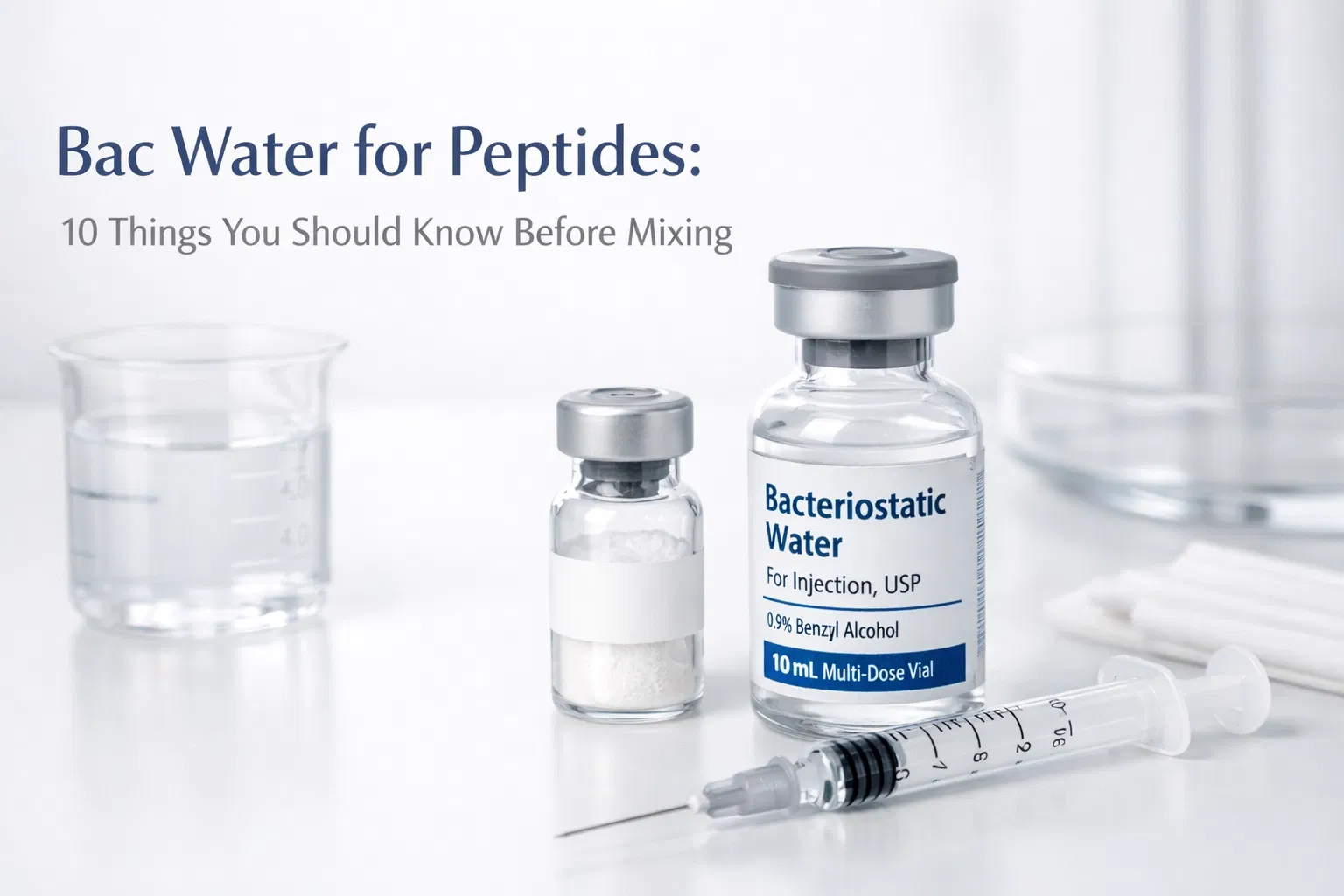

Hi Mate! Ivan here from WeightLossChems. If you’re reading this, you’re ready to Unlock the true power of your research. But before you dive into the world of advanced metabolic pathways and cellular rejuvenation, we need to talk about the "liquid gold" of the lab: Bacteriostatic (BAC) Water.
Mixing your research compounds isn't just a chore: it’s a precision science. Do it right, and you Transform a simple lyophilized powder into a potent tool for discovery. Do it wrong, and you might as well be flushing your budget down the drain.
In this "Video Guide" style blog, we’re breaking down the 10 absolute essentials you need to know about BAC water for peptides. Let’s get your lab workflow to a VIP level.
[0:45] 1. Understand What BAC Water Actually Is
First things first: What makes Bacteriostatic Water different from the sterile water you find at the chemist? It’s all in the name. "Bacteriostatic" means it stops bacteria from reproducing.
BAC water is essentially sterile water with 0.9% Benzyl Alcohol added as a preservative. This is the "secret sauce" that allows you to use a single vial multiple times. Without that alcohol, bacteria would have a party in your vial the second a needle touches it.
Pro Tip: Never swap BAC water for plain sterile water if you plan on using the vial for more than one session. Sterile water has no preservative; once it’s open, it’s a ticking clock for contamination.
[2:15] 2. Verify Your Peptide Vial Integrity
Before you even crack the cap on your BAC water, look at your p-eptide vial. At WeightLossChems, we ship our compounds as lyophilized (freeze-dried) powders. This keeps them stable during transit.
Check the vacuum seal. When you eventually insert your needle, you should feel a slight "pull": that’s the vacuum. If the powder looks melted, gooey, or the seal is broken, stop right there. A compromised vial is a compromised result.
[4:00] 3. Sterility is Non-Negotiable
You want to Revolutionize your research, not your infection risk. Your workspace should look like a high-tech clean room.
- Step 1: Wash your hands like you’re prepping for surgery.
- Step 2: Clear a flat surface and hit it with disinfectant.
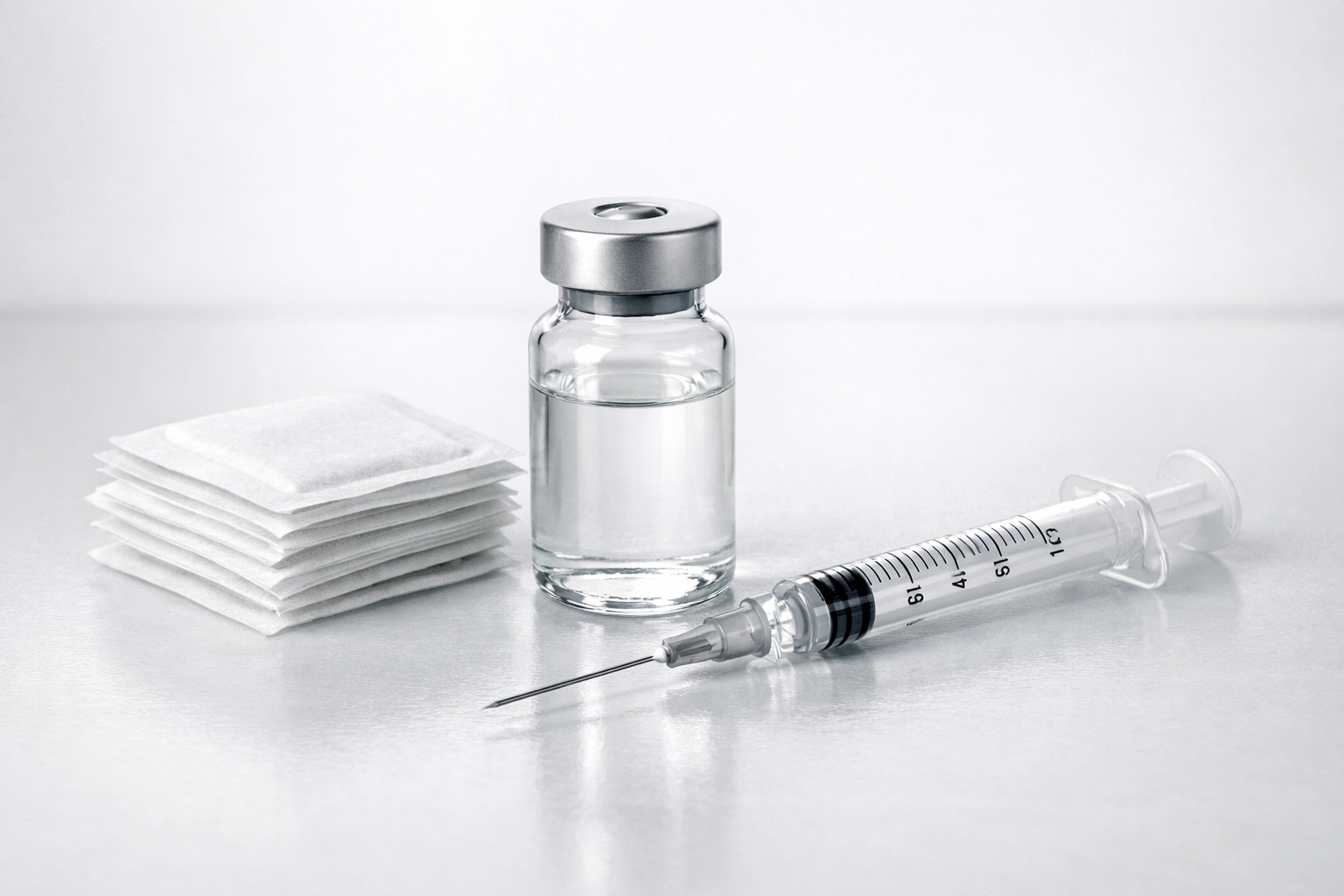
- Step 3: Alcohol swabs are your best friends. Wipe the rubber stopper of the BAC water and the peptide vial. Every. Single. Time.
[5:30] 4. Mastering "Peptide Math" (The Calculation)
This is where most researchers get a bit shaky. Don't worry: it’s simpler than it looks. You need to calculate the volume of water needed to reach your desired concentration.
The Formula:
Amount of Peptide (mg) / Desired Concentration (mg/mL) = Volume of BAC Water (mL)
Example: You have a 10mg vial of a Tirz-type research compound and you want a concentration of 5mg per mL.
10mg / 5mg = 2mL of BAC water.
Using a higher volume of water makes it easier to measure tiny doses accurately on a standard syringe.
[7:45] 5. Choose Your Concentration Wisely
Think of concentration like "Scientific Luxury." If you use too little water, the solution becomes hyper-concentrated, making it extremely difficult to pull an accurate micro-dose. If you use too much, you’re injecting a huge volume of liquid just to get a tiny bit of active compound.
For most research protocols, 1mL to 2mL per vial is the "sweet spot" for accuracy and stability.
[9:15] 6. The "Wall Trick": Injecting Water Slowly
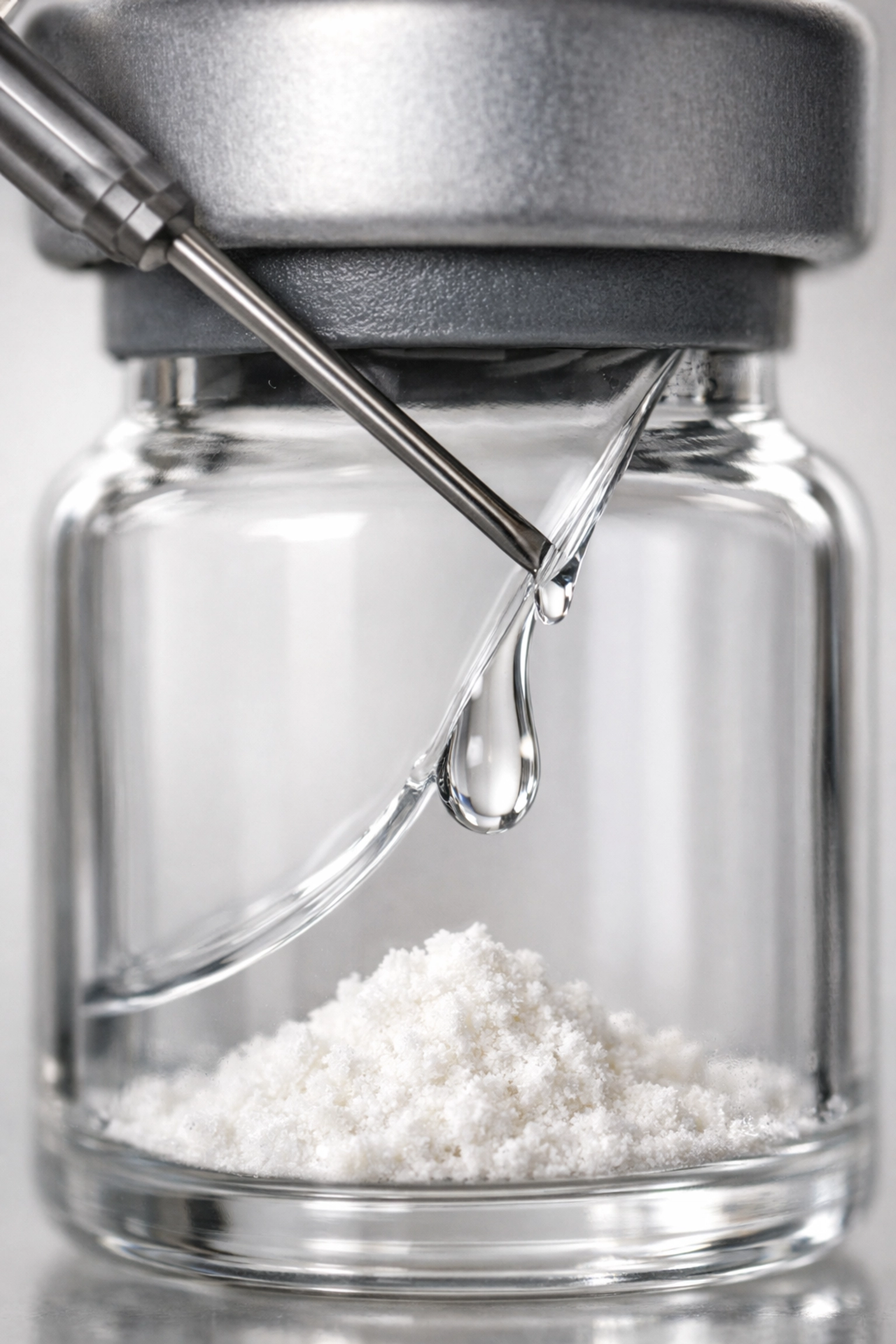
If there’s one thing you take away from this guide, let it be this: Never spray water directly onto the powder.
Peptides are delicate strings of amino acids. If you hit them with a high-pressure stream of BAC water, you can "shear" the molecules, effectively breaking them before they even get to work.
The Technique: Aim the needle toward the inside wall of the glass vial. Let the water trickle down slowly. This prevents foaming and protects the integrity of the compound.
[11:00] 7. The Gentle Swirl (Never Shake!)
We’ve all seen the movies where the scientist shakes a test tube vigorously. Do not do this.
Shaking introduces air bubbles and mechanical stress that can degrade your research material. Instead, pick up the vial and gently swirl it between your thumb and forefinger.
Wait for it: Some compounds dissolve instantly; others take a few minutes. If it’s still cloudy, just let it sit in the fridge for 10-20 minutes. It will eventually clear up on its own. Patience is a virtue in the lab!
[13:30] 8. The 30-Day Stability Rule
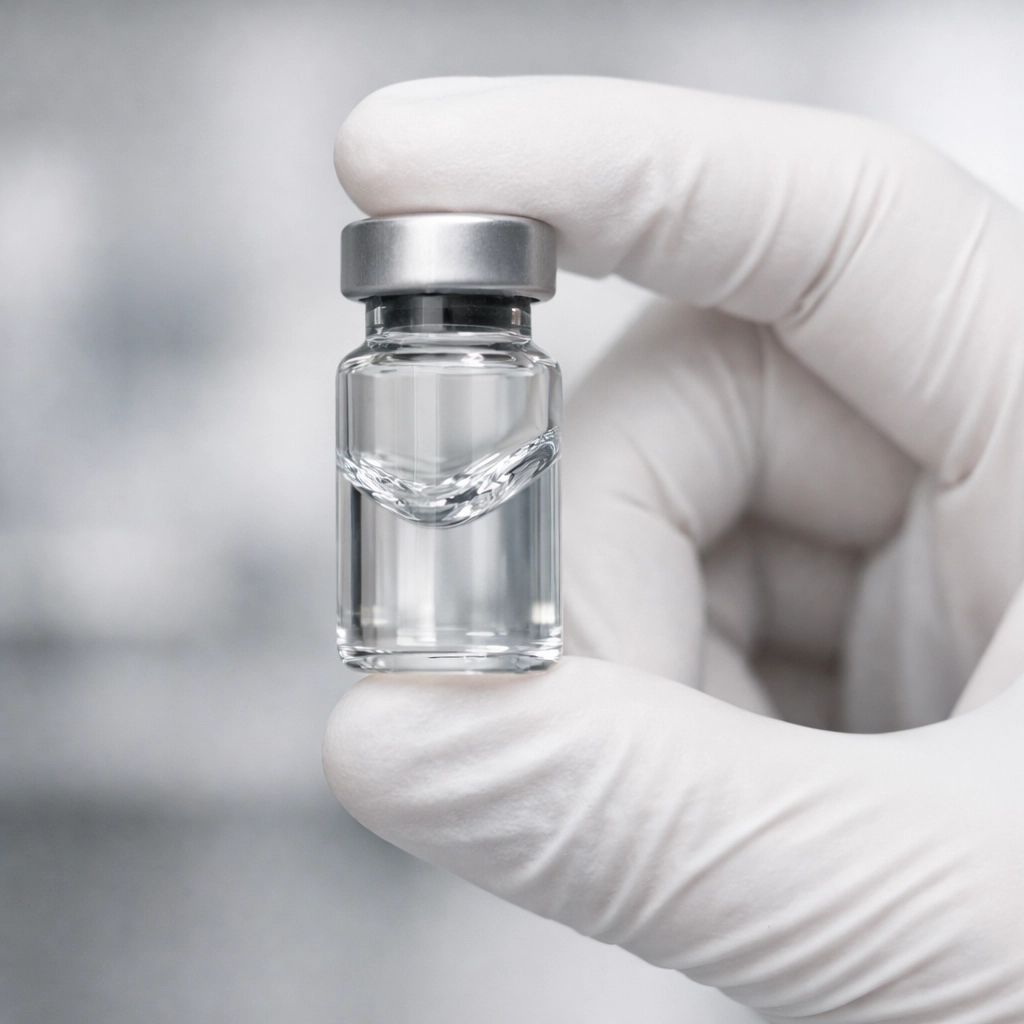
Once you’ve mixed (reconstituted) your peptide with BAC water, the clock starts ticking. While the powder might last months in the freezer, the liquid version is much more fragile.
Generally, most research p-eptides remain stable for 30 days once reconstituted, provided they are kept cold. After 30 days, the peptide bonds start to break down, and the potency drops off a cliff.
Action Item: Use a fine-tip permanent marker to write the "Date of Mix" right on the vial label. Don't rely on your memory!
[15:00] 9. Cold Storage: The Gold Standard
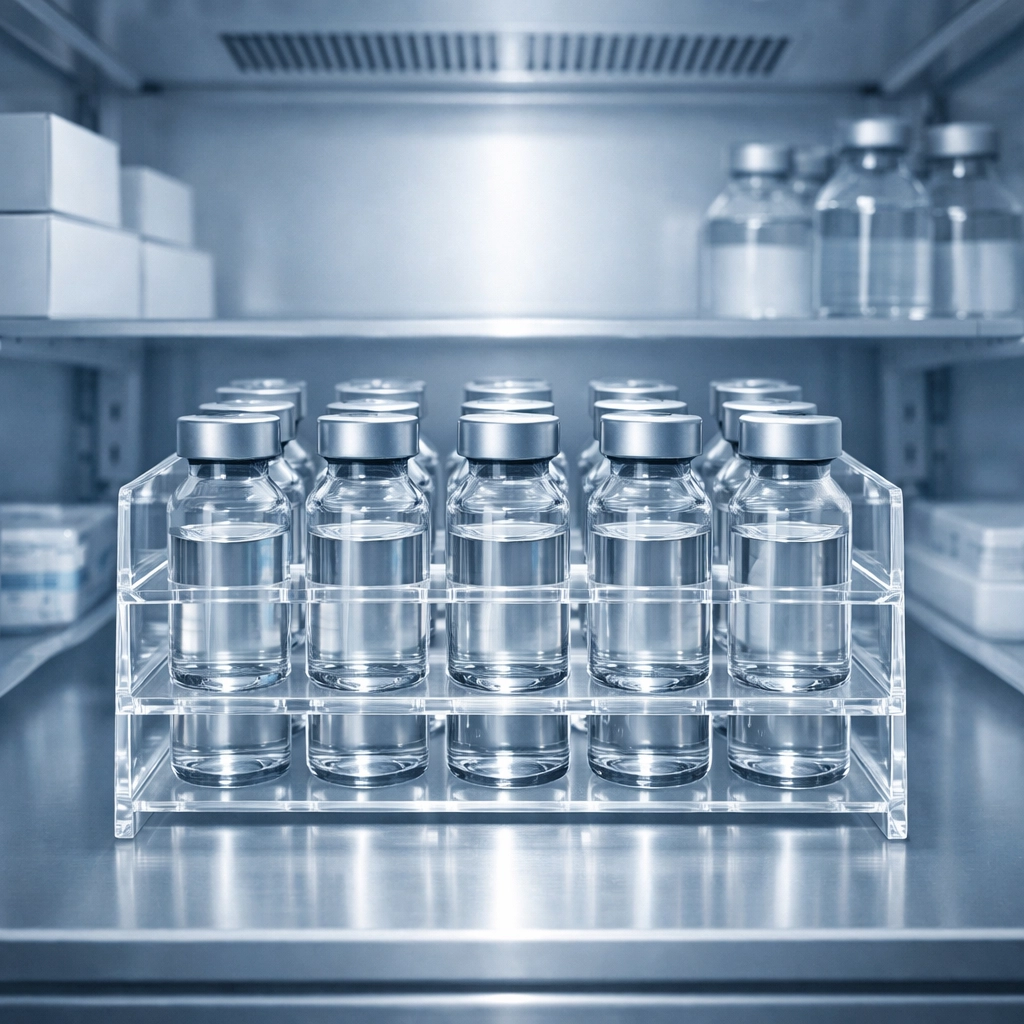
Heat and light are the enemies of your research. Once mixed, your vials belong in the refrigerator (ideally between 2°C and 8°C).
Keep them away from the freezer door where temperatures fluctuate, and definitely keep them out of direct sunlight. A dedicated small "beauty fridge" or a secure container in the back of the main fridge is the way to go for the serious researcher.
[16:45] 10. Consistent Sterile Technique (The "VIP Club" Standard)
Every time you draw a dose from your vial, you are technically introducing a risk. To maintain the Revolutionary quality of your research:
- Always use a brand-new, sterile syringe for every draw.
- Never "double-dip" or reuse needles.
- Wipe the stopper with alcohol before and after every use.
Consistency is what separates the amateurs from the pros. By following these steps, you ensure that your biological research is reliable, reproducible, and safe.
Ready to Unlock Your Research?
Mixing BAC water with peptides doesn't have to be intimidating. It’s about respect for the science and attention to detail. When you treat your lab materials with this level of care, you’re setting yourself up to Combat metabolic plateaus and Transform your results.
Need to restock your lab?
At WeightLossChems, we provide the high-purity research materials you need to take your projects to the next level. Whether you're looking for the latest triple agonists or essential lab supplies, we’ve got your back.
[Join our Exclusive Research List] to get notified about new drops and VIP-only discounts on the latest metabolic research compounds.
Stay curious, stay sterile, and happy researching!
: Ivan & The WeightLossChems Team