
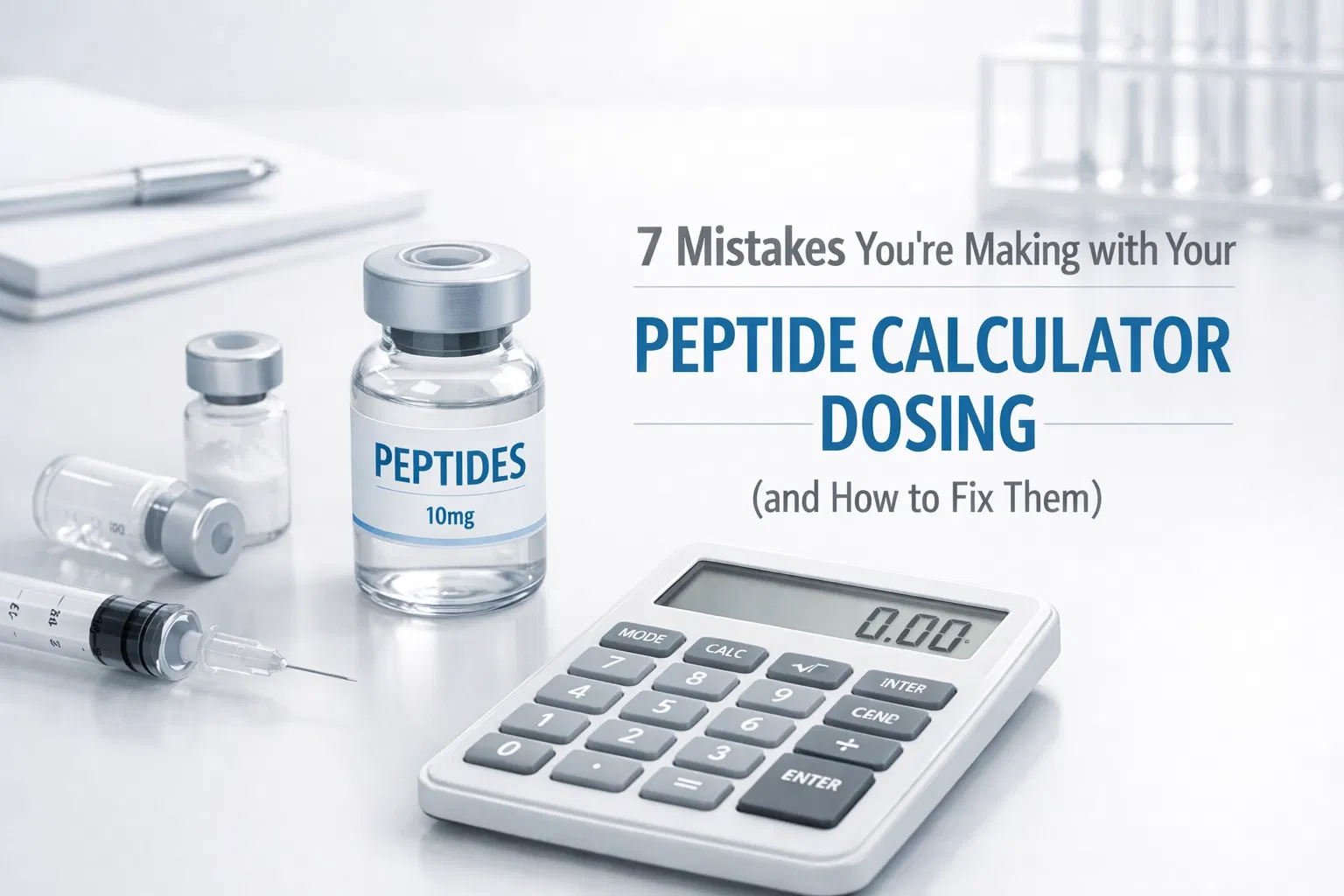
7 Mistakes You’re Making with Your Peptide Calculator Dosing (and How to Fix Them)

Hi Mate! Welcome back to the lab. If you’re here, you’re likely ready to Unlock the next level of your research journey. Whether you’re looking to Transform metabolic pathways or Revolutionize your physical recovery, there is one thing that stands between you and peak results: precision.
In the world of high-end research, "eyeballing it" is the fastest way to ruin a perfectly good vial of high-purity lyophilized powder. We’re talking about "scientific luxury", the kind of results that only come when your math is as sharp as your ambition. Yet, even the most seasoned researchers fall into traps when using a peptide calculator dosing tool.
Don't let a simple math error stall your progress. Let’s dive into the seven most common mistakes researchers make with their reconstitution calculator peptide settings and how you can fix them today to ensure your research stays on the cutting edge.
1. The Fatal "MG vs. MCG" Mix-up
This is the king of all errors. In the clinical world, units matter. Most research vials, like our premium Tirzepatide or Retatrutide, are measured in milligrams (mg). However, your research protocols often call for doses in micrograms (mcg).
The math is simple, but under pressure, it’s easy to slip up: 1mg = 1,000mcg.
If your peptide calculator dosing is set to "mg" when you meant "mcg," you could accidentally be administering a dose 1,000 times stronger than intended. That isn't "scientific luxury"; that's a lab disaster. Always double-check your decimals. If you have a 5mg vial, you have 5,000mcg to work with. Period.
2. Using Too Much (or Too Little) Bacteriostatic Water
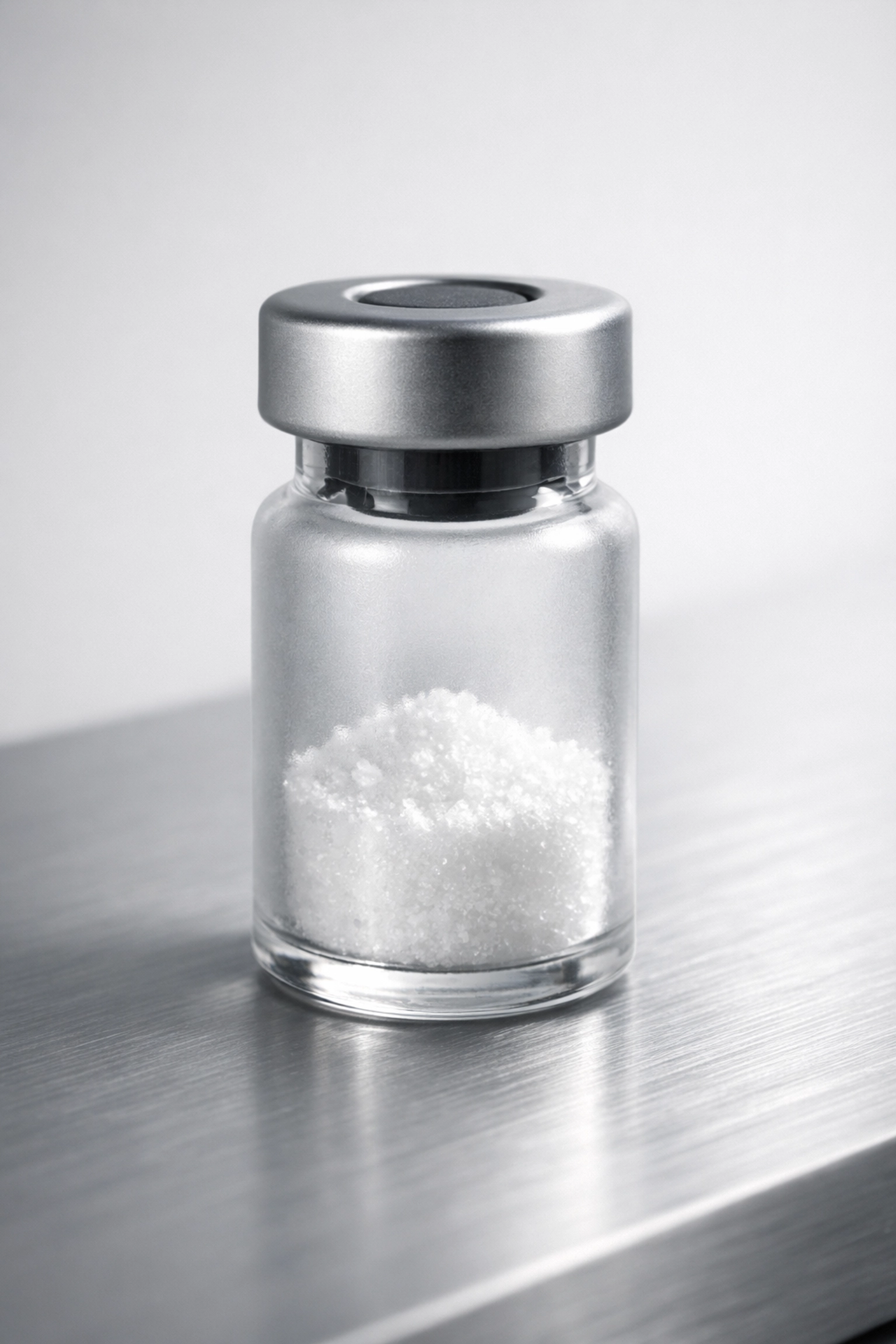
Reconstitution is an art form. One of the biggest mistakes we see is researchers overcomplicating the volume of Bacteriostatic (BAC) water.
Some think more water means a more "diluted" and therefore "safer" dose. Others try to use as little water as possible to keep the injection volume small. Here’s the fix: The amount of water doesn’t change the total amount of peptide in the vial. It only changes the concentration.
If you put 1ml of BAC water into a 5mg vial, your reconstitution calculator peptide will tell you that a 250mcg dose is 5 units on a standard syringe. If you put 2ml in, that same dose becomes 10 units. The mistake is choosing a volume that makes the math impossible to read on a tiny syringe scale. Aim for a volume that lands your dose between 10 and 25 units for maximum accuracy.
3. Ignoring the "Vial Capacity" Constraints
We’ve all been there, you’ve got your BAC water ready, you’re feeling like a pro, and suddenly, the vial is full but you still have 1ml of water left in your syringe.
Most standard research vials are designed to hold between 3.0ml and 3.5ml comfortably. If you’re trying to reconstitute a large-quantity vial (like a 20mg or 30mg researcher's special) and you want a low concentration, you might run out of room.
The Fix: Check your vial size before you start your peptide calculator dosing math. If you need a high volume of water for precision, make sure the physical glassware can handle it. If not, you’ll need to increase the concentration (use less water) and be extra careful with your syringe measurements.
4. Syringe Selection: The "Unit" Confusion
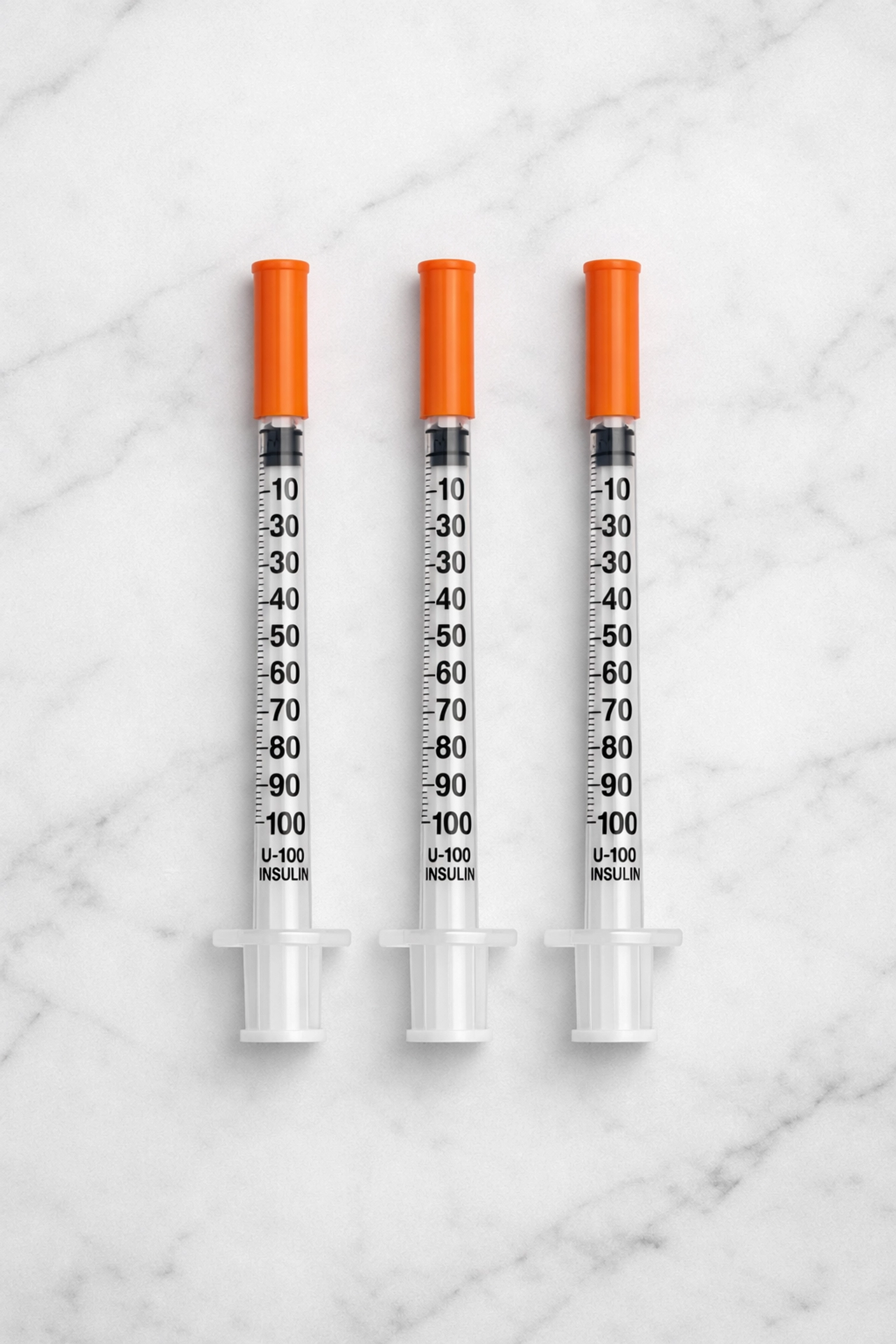
Not all syringes are created equal. In this community, we almost exclusively use U-100 insulin syringes. These are calibrated so that 100 "units" equals 1ml.
The mistake happens when a researcher uses a U-40 syringe or a 3ml large-gauge syringe and tries to apply the same "unit" logic. If your reconstitution calculator peptide tells you "10 units," it assumes you are using a standard U-100 1ml syringe.
Fix: Stick to the gold standard. Use 0.5ml or 1.0ml U-100 syringes. They provide the granularity you need to see those tiny lines, ensuring your research is precise and your "Exclusive Drops" aren't wasted.
5. Math Errors in "Dead Space"
This is a bit of "insider knowledge" for the VIPs. Every syringe has a tiny bit of "dead space", the area in the needle and the tip where a small amount of liquid stays even after the plunger is fully depressed.
While modern syringes are designed to minimize this, if you are constantly switching vials or drawing from multiple sources, these fractions of a milliliter add up.
The Fix: Don’t overthink it, but do account for it by being consistent. Don’t "pump" the plunger. Draw your dose once, firmly, and ensure no air bubbles are taking up space where your high-purity research materials should be. Precision is the hallmark of the WeightLossChems community.
6. The "Tutorial" Shortcut: Watch and Learn
Before we get to the final mistake, let's look at the right way to do it. Many researchers try to wing it because they find the math intimidating. But you don't have to be a mathlete to achieve scientific luxury.
We’ve curated a high-level tutorial that walks you through the exact process of using a peptide calculator dosing tool. Watch this to visualize the steps we've discussed:
7. Blindly Trusting a "Preset" Chart
The internet is full of "dosage charts" for specific p-tides. You’ll see a graphic that says "Tirzepatide 5mg = 10 units."
Stop! This is a dangerous mistake.
A chart like that only works if you use the exact same amount of BAC water as the person who made the chart. If they used 1ml and you used 2ml, your dose will be half of what you intended. This can lead to under-dosing, which makes the research appear ineffective, or worse, over-dosing and dealing with unwanted side effects.
The Fix: Treat every vial as a new experiment. Use a reconstitution calculator peptide tool every single time. Input your vial size (mg), your BAC water volume (ml), and your desired dose (mcg). Let the algorithm do the heavy lifting so you can focus on the results.

Why Precision is Your Ultimate Power Move
In the competitive world of health and wellness research, precision is what separates the novices from the pros. When you Combat biological hurdles with high-tech solutions like our triple agonists or specialized peptides, you owe it to your research to be exact.
Proper peptide calculator dosing ensures that you:
- Combat metabolic plateaus effectively.
- Unlock the true potential of the compound.
- Transform your data into actionable progress.
- Avoid wasting expensive, high-purity research materials.
Join the WeightLossChems Elite
You aren't just buying research materials; you're joining a movement. At WeightLossChems, we believe in providing the tools you need to Revolutionize your approach to health. From our high-purity vials to the knowledge we share in our VIP Club, we are here to support your journey.
Ready to put your new math skills to the test? Check out our latest Exclusive Drops and grab the highest quality research peptides on the market. Whether it's the latest in GLP-1 research or specialized recovery p-tides, we've got you covered with the scientific luxury you deserve.
Stay sharp, keep your math tighter than your macros, and let’s get those results.
Disclaimer: All products sold by WeightLossChems are intended for research purposes only. These products are not intended to diagnose, treat, cure, or prevent any disease. Please ensure you are following all local laws and regulations regarding research peptides.