
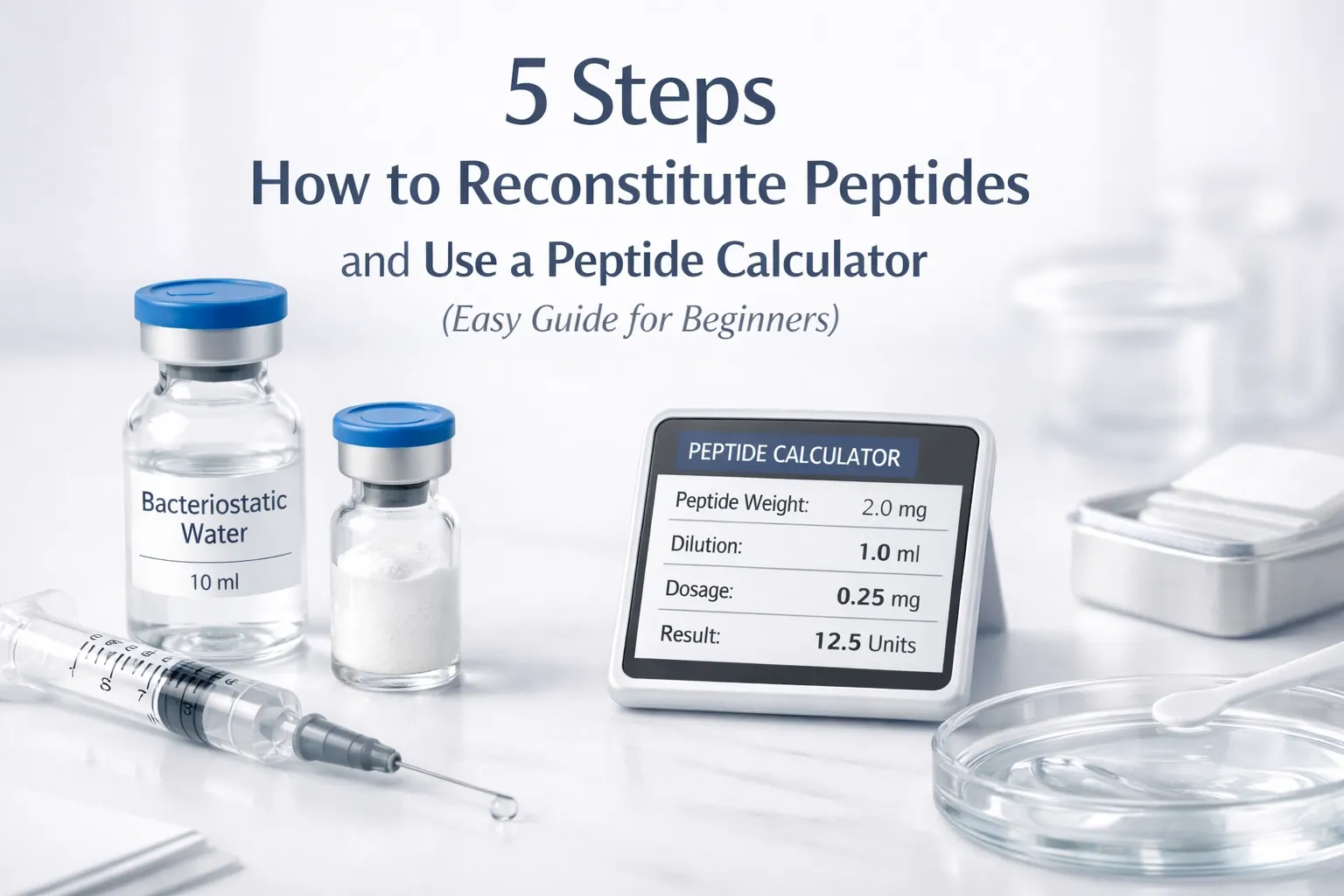
5 Steps How to Reconstitute Peptides and Use a Peptide Calculator (Easy Guide for Beginners)

Hi Mate! Welcome to the inner circle of high-end research. If you’ve just received your latest shipment from WeightLossChems, you’re likely holding a vial of lyophilized (freeze-dried) powder and wondering, "Now what?"
Whether you are working with Retatrutide, Tirzepatide, or other cutting-edge research compounds, the process of reconstitution is the most critical step in your protocol. Get it right, and you unlock the full potency of these revolutionary molecules. Get it wrong, and you risk degrading the fragile peptide chains.
In this guide, we’re going to walk you through the "scientific luxury" of proper peptide preparation. We’ll cover everything from handling bac water for peptides to mastering the peptide calculator dosing so you can approach your research with absolute precision and confidence.
The Research Toolkit: What You’ll Need
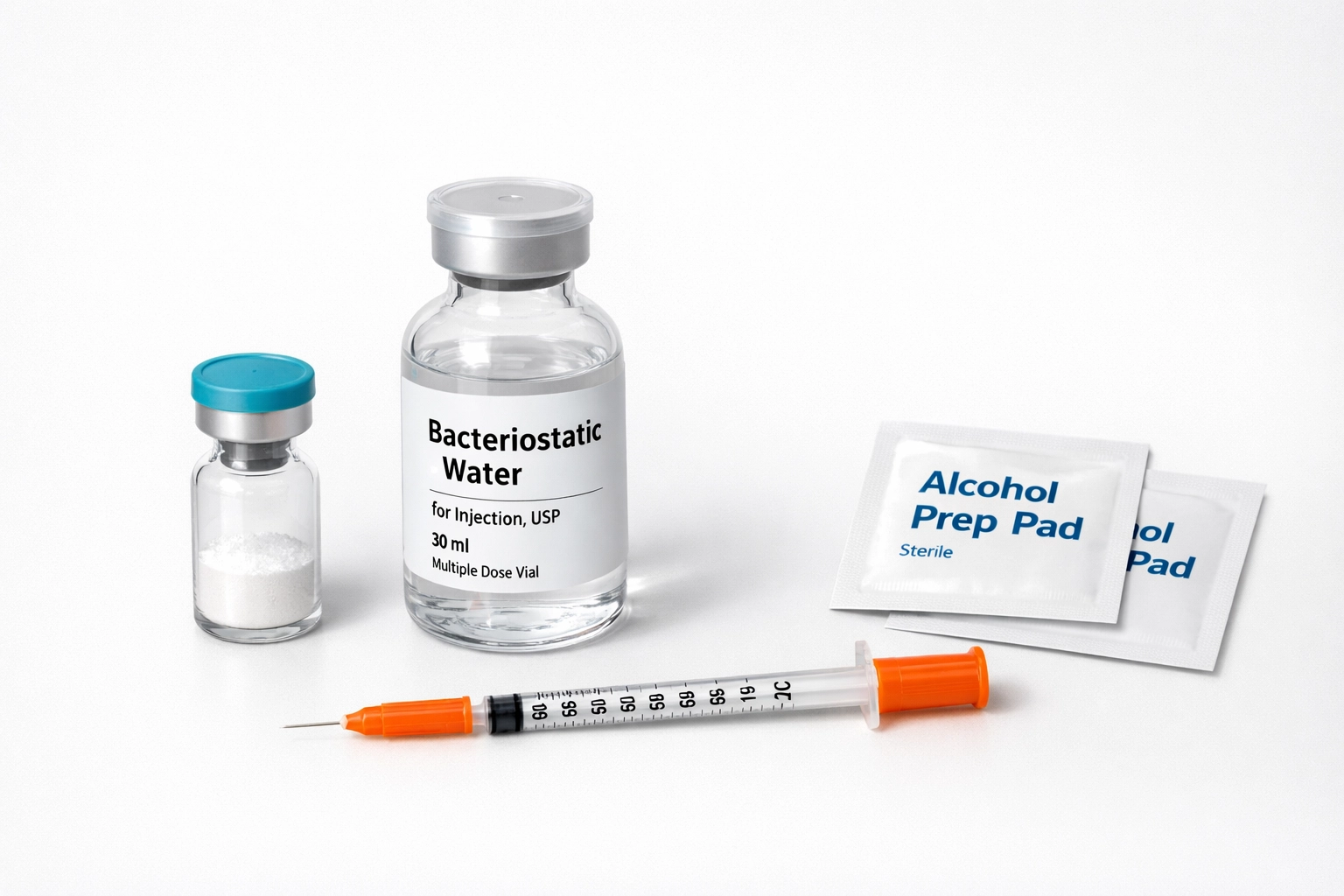
Before we dive into the steps, let’s ensure your lab bench is stocked with the essentials. At WeightLossChems, we believe in providing the high-tech solutions needed for elite results. You wouldn't use a blunt tool to perform a masterpiece, and the same applies here.
- Your Peptide Vial: (e.g., Tirzepatide or Retatrutide).
- Bacteriostatic Water (Bac Water): This is non-negotiable. Sterile water isn't enough; you need Bac water because it contains 0.9% benzyl alcohol, which inhibits bacterial growth for up to 28 days.
- Insulin Syringes: Typically 1ml (100 units) or 0.5ml (50 units).
- Alcohol Prep Pads: For maintaining a sterile environment.
- A Peptide Calculator: We recommend using the WeightLossChems tool to ensure your math is flawless.
Step 1: Sanitize and Prepare Your Workspace
Precision starts with purity. Research peptides are delicate biological structures. Contamination isn't just a safety risk; it can actively "combat" the effectiveness of your research.
First, wash your hands thoroughly. Clear a flat surface and wipe it down with a disinfectant. Take your peptide vial and your Bac water vial and pop the plastic caps off. You’ll see a rubber stopper underneath.
Pro Tip: Even if the vial is brand new, you must wipe the rubber stopper with an alcohol prep pad. Swipe in one direction to ensure any microscopic debris is moved off the surface. Let it air dry for 30 seconds. Do not blow on it!
Step 2: Drawing the Bac Water for Peptides
Now, we need to decide how much bac water for peptides we are going to use. Most researchers prefer a ratio that makes the math easy: usually 1ml or 2ml of water per vial.
- Take your large reconstitution syringe (or a standard insulin syringe if you are doing a small volume).
- Pull the plunger back to the 1ml mark to fill the syringe with air.
- Insert the needle into the Bac water vial and push the air in. This equalizes the pressure, making it easier to draw the liquid out.
- Invert the vial and pull back exactly 1ml (or your chosen amount) of Bac water.
[INSERT YOUTUBE VIDEO: How to Reconstitute Peptides and Draw Bac Water]
Step 3: The "Slow Drip" Reconstitution
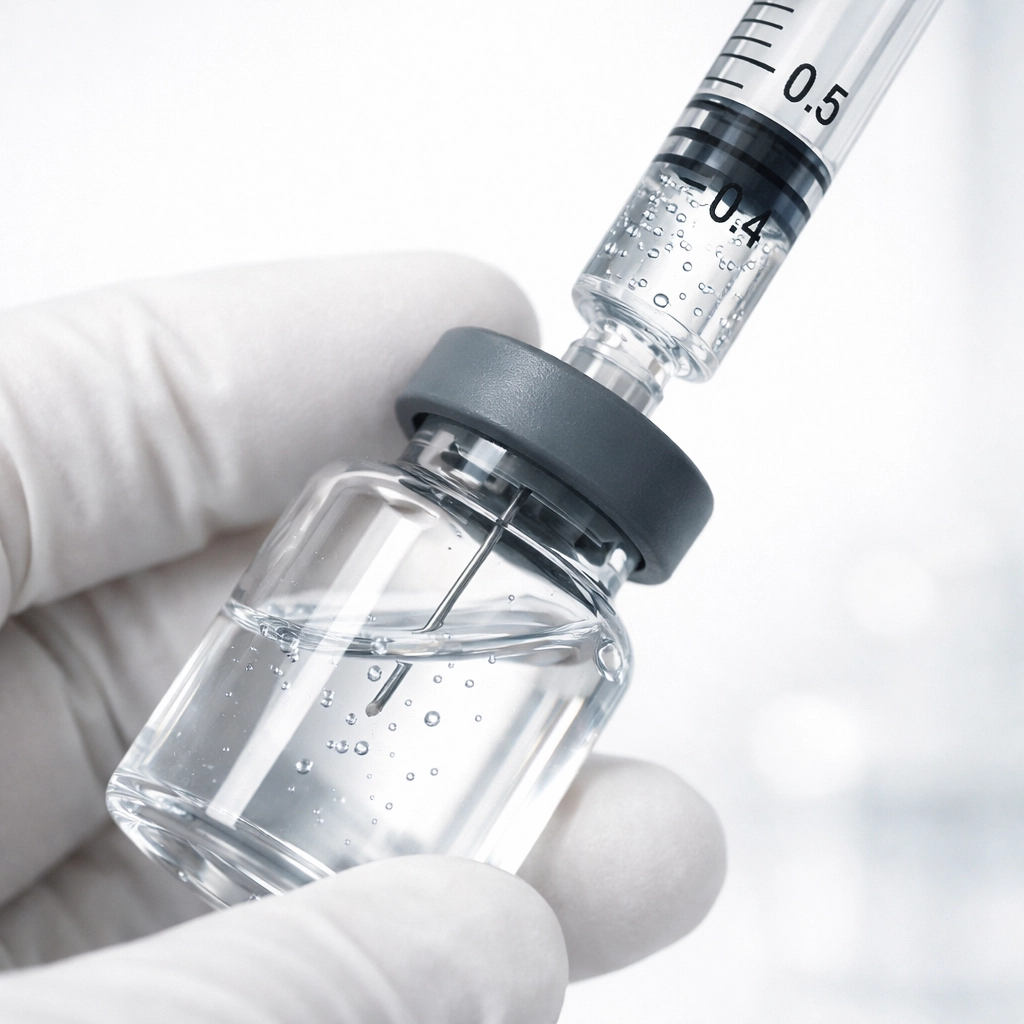
This is where most beginners make a mistake. Peptide vials are often vacuum-sealed. If you just stick the needle in and let go, the vacuum will "suck" the water in at high speed, slamming it into the delicate powder. This can "bruise" or shear the peptide chains, potentially ruining your expensive research material.
The Golden Rule: Aim the needle at the side of the glass vial wall.
Slowly depress the plunger, letting the Bac water trickle down the side of the glass and gently wash over the powder. You want a "transformation" of the solid into a liquid, not a collision.
Step 4: The Gentle Dissolve (The "No Shake" Rule)
Once the water is in, you’ll notice the powder starts to disappear. Resist the urge to shake the vial like a cocktail! Shaking creates bubbles and can denature the proteins.
Instead, hold the vial between your thumb and forefinger and gently swirl it. You can also roll the vial between your palms. This "scientific luxury" approach ensures the peptide stays stable.
If there are still a few "floaties," don't worry. Put the vial in the fridge for 15–30 minutes. Usually, the remaining particles will dissolve on their own with a little bit of time and cold. Once the solution is clear and colorless, your reconstitution is complete.
Step 5: Mastering the Peptide Calculator Dosing
This is the part that intimidates people, but it’s actually the most "revolutionary" part of your workflow once you get it. You need to know how many "units" on your syringe equal the "mg" or "mcg" of the dose you want to research.
Using a reconstitution calculator peptide tool like the one on WeightLossChems removes the guesswork.
How to use the Peptide Calculator:
- Vial Amount (mg): Enter the total milligrams in the vial (e.g., 5mg or 10mg).
- Water Volume (ml): Enter how much Bac water you added (e.g., 1ml or 2ml).
- Desired Dose (mcg/mg): Enter the specific amount you want to pull for a single research session. Note: 1mg = 1,000mcg.
- Syringe Size: Usually 100 units (1ml).
Example Scenario:
- You have a 5mg vial of Tirzepatide.
- You added 1ml (100 units) of Bac water.
- You want a 2.5mg dose.
- The calculator will tell you to pull to the 50-unit mark on your syringe.
[INSERT YOUTUBE VIDEO: How to Use a Peptide Calculator for Accurate Dosing]
Using a peptide calculator dosing tool ensures that your "metabolic pathways" research is consistent. Consistency is the key to unlocking the transformative data you are looking for.
Storage and Longevity: Protecting Your Investment
Now that your peptide is liquid, it is "active" and much more fragile. To prevent bacterial contamination and maintain the "VIP" quality of the compound, follow these storage rules:
- Refrigerate Immediately: Keep your reconstituted vials at 2-8°C (36-46°F). Do not freeze them once liquid.
- Protect from Light: Most peptides are light-sensitive. Keep them in the box or a dark corner of the fridge.
- Check the Date: Once reconstituted with bac water for peptides, the vial is generally good for 28 to 30 days. After that, the benzyl alcohol begins to lose its effectiveness, and the peptide itself may start to degrade.
Common Troubleshooting
What if the solution is cloudy?
If the solution remains cloudy after 30 minutes in the fridge and a gentle swirl, the peptide may have "crashed" out of solution or there might be a pH issue. In some rare cases, this happens with high-concentration blends. However, for standard Tirzepatide or Retatrutide, it should be crystal clear.
What if I accidentally shook it?
Don't panic. You likely haven't destroyed 100% of it, but you may have reduced its potency. Let it settle in the fridge until all the foam disappears before using it.
Unlock Your Research Potential
Reconstituting peptides is a skill that separates the amateurs from the pros. By following these five steps: Sanitize, Draw, Drip, Swirl, and Calculate: you are ensuring that your research subjects receive the highest quality, most stable version of the compound possible.
At WeightLossChems, we are committed to your success. Our research-grade peptides are manufactured to the highest standards, designed to help you revolutionize your understanding of health and wellness.
Ready to start your next project? Head over to our shop to view our Exclusive Drops and VIP Club offers.
Happy Researching!
Key Takeaways for Beginners:
- Always use Bac water to prevent bacterial growth.
- Never spray water directly onto the powder; aim for the side of the glass.
- Never shake the vial; only swirl or roll.
- Always use a peptide calculator to verify your dose before drawing into the syringe.
- Store in the fridge and keep away from light to maintain potency.